


Open a Driving School Franchise
Driving School Franchises Listing
Learner drivers keep demand for lessons strong across the country. Our driving school franchises let qualified and trainee instructors work under an established brand, with a dual-controlled car, pupils and booking systems provided. Compare the driving school brands recruiting in the UK and what each weekly fee includes.
Reset filters
filter
Personal Contribution
- < £5 000
- £5 000 - £10 000
- £10 000 - £25 000
- £25 000 - £50 000
- > £50 000
Deselect
Sort By
- Most recent sign
- Oldest franchise
- Lowest personal contribution
- Largest personal contribution


Questions about driving school franchises
How much does a driving school franchise cost?
Up-front costs are usually low, and the main cost is a weekly or monthly franchise fee that may include a dual-controlled car, insurance and servicing. If you are not yet qualified, you also need to budget for instructor training. Each listing on this page shows the personal contribution required.
Do I need to be a qualified driving instructor?
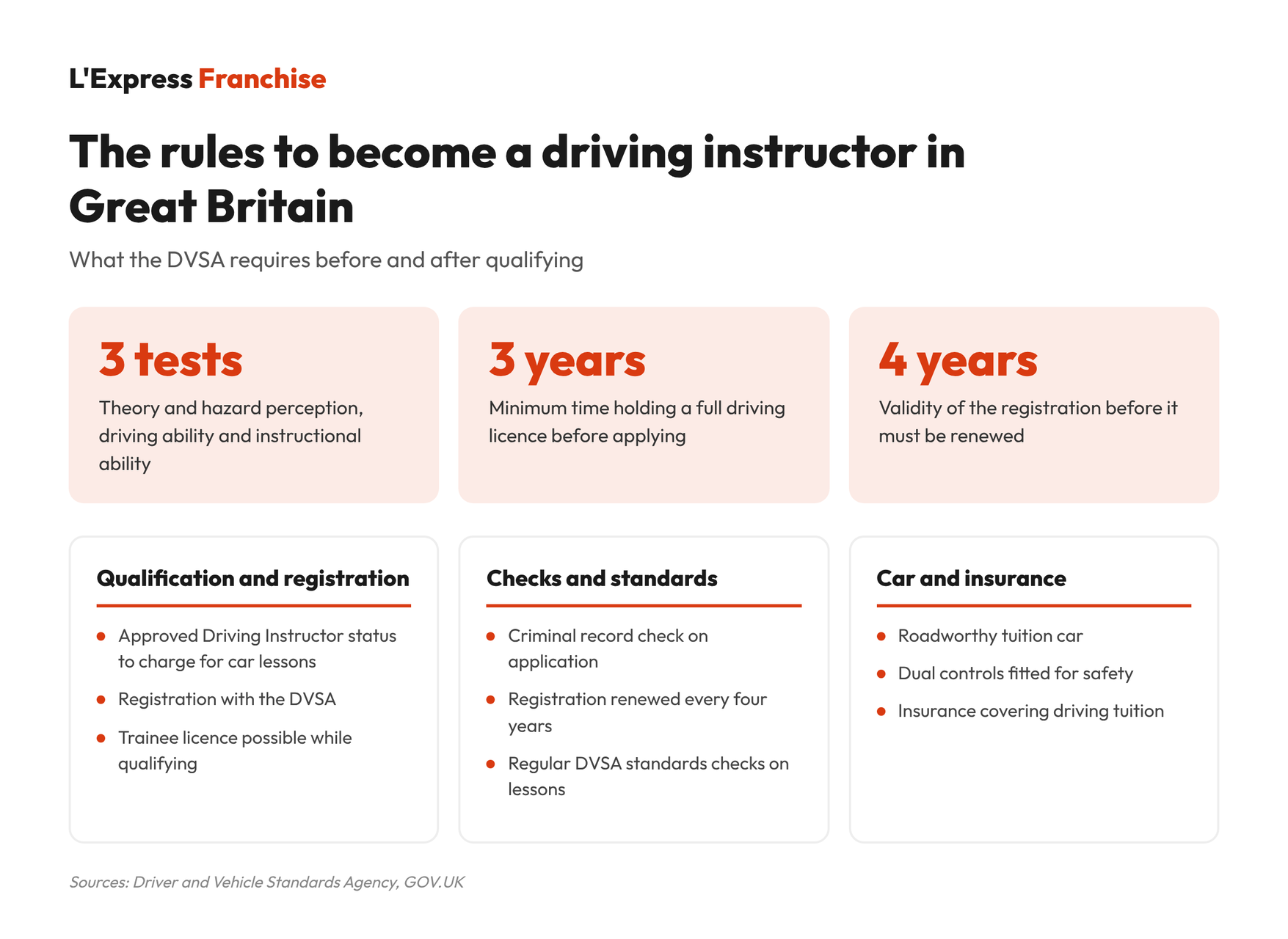
To charge for lessons you must be an Approved Driving Instructor registered with the DVSA, or hold a trainee licence while qualifying. Many franchises offer training for people starting from scratch.
How do you become an Approved Driving Instructor?
You must have held a full licence for at least three years, pass a criminal record check and pass three DVSA tests covering theory and hazard perception, driving ability and instructional ability.
Does a driving school franchise provide pupils?
Most do, through national marketing and online booking, but the number of pupils varies. Ask how leads are shared and whether a minimum number of pupils is promised in the agreement.
How much can a driving instructor earn?
Earnings depend on lessons delivered per week, lesson prices and costs such as the franchise fee and fuel. Ask existing instructors in the network for real figures after costs.
How do I choose the right driving school franchise?
Compare weekly fees and what they include, car and insurance terms, pupil supply and contract length, speak to existing instructors and check whether the brand is a member of the British Franchise Association.
Learning to drive remains a rite of passage, and demand for lessons is at record levels. The Driver and Vehicle Standards Agency carried out around 1.84 million car practical tests in 2024 to 2025, with a national pass rate of 48.7%. Waiting times for tests have been long: the National Audit Office reported an average wait of 22 weeks in September 2025, and the DVSA does not expect to reach its seven-week target before November 2027. For instructors, that means learners keep booking lessons for longer while they wait.
How does a driving school franchise work?
Most driving school franchises are built around the instructor rather than premises. You work as a self-employed Approved Driving Instructor under the school’s name, and in return for a weekly or monthly fee the school provides some or all of the following:
- a new dual-controlled car, insurance, servicing and replacement;
- a flow of learner enquiries from national marketing and online booking;
- booking and payment systems, teaching resources and continuing training;
- support to qualify, if you are not yet an instructor.
You keep the lesson fees you earn, and you choose your own working hours. A DVSA survey of instructors found that the most common price for a one-hour lesson was between £36 and £40.
Do you need to be qualified already?
To charge for car lessons in Great Britain, you must be registered with the DVSA as an Approved Driving Instructor, or hold a trainee licence while you qualify. Qualifying involves three tests covering theory and hazard perception, your own driving ability and your ability to teach. You must have held a full licence for at least three years and pass a criminal record check. Many franchises offer training for people starting from scratch, often with a franchise on qualification.
What decides how much you earn?
Income depends on how many lessons you teach each week, your price per lesson and your costs, mainly the franchise fee and fuel. Instructors with strong pass rates and good reviews get more referrals, which reduces their reliance on the school for pupils. Block bookings, intensive courses and refresher lessons for qualified drivers can all help fill the diary.
Is it the right job for you?
Our guide on how to open a driving school explains the route to becoming an instructor and building a pupil base.
Driving instruction suits patient, calm people who enjoy teaching and want flexible, independent work. It is a common choice for career changers and for people who want a business they can start without premises or staff. If teaching appeals more broadly, explore the training and education franchises. If cars are what interest you most, compare with the automotive franchises.