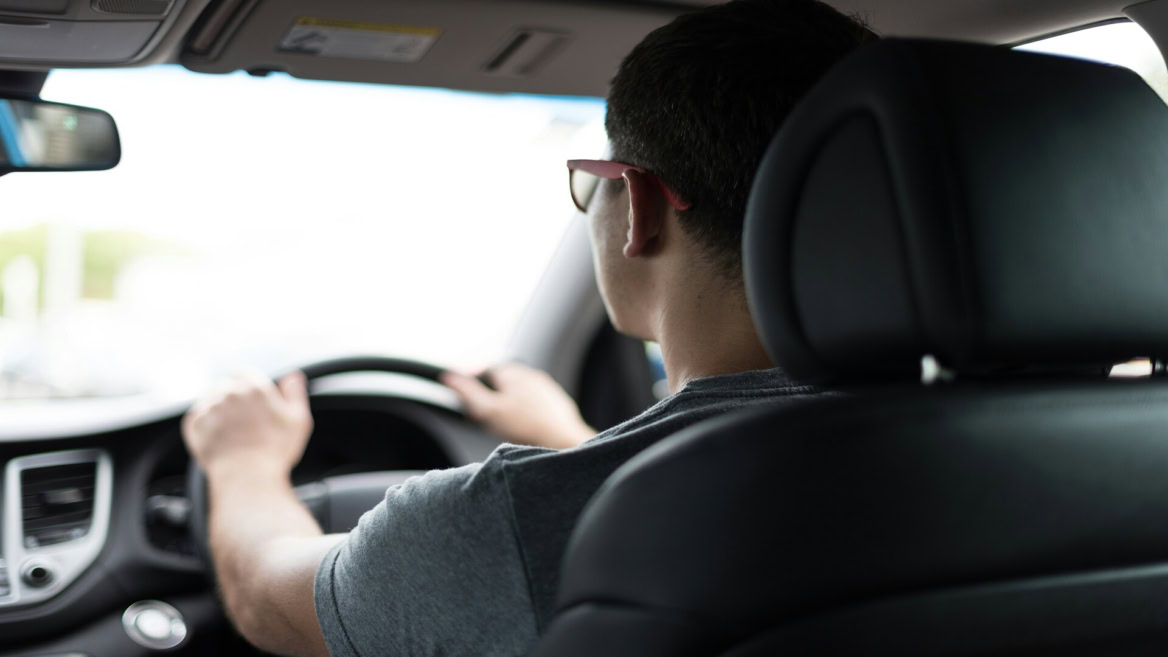

It is illegal to charge for driving lessons in the UK without being on the approved driving instructor register. The registration belongs to the person, not the business, lasts four years and cannot be sold or passed on. Whatever else a driving school is worth on the day its owner stops teaching, the thing that made it lawful is not part of it.
How to open a driving school in the UK, step by step
The checklist, in the order the route runs:
- Eligibility checked for the nation of qualification
- New enhanced criminal record check obtained
- Part 1 passed, then part 3 booked within two years
- Trainee licence decided after part 2
- Registered on the ADI register within a year of part 3
- Franchise or independent decided on the weekly numbers
- Dual-control car and tuition insurance in place
- Business registered and test availability set up
- Pupil flow built: listing, website, reviews, referrals
- Registration kept alive: renewal, standards checks, notifications
Driving instruction is a reserved activity with a protected title, which puts it closer to a licensed profession than to most small businesses. Great Britain runs one register through the Driver and Vehicle Standards Agency; Northern Ireland runs a separate one through the Driver and Vehicle Agency, under its own legislation and with its own fees.
The qualifying route is the same shape in both, but the tests, the prices and the eligibility rules differ. Tax, company registration and self-employment rules are UK-wide.
What is a driving school business?
A driving school business provides paid driving instruction, which in the UK may only be given by someone registered as an approved driving instructor, and in practice it is either a single self-employed instructor trading under their own name or a brand that supplies pupils and a car to instructors who remain self-employed. The qualification sits with the individual. The business around it is whatever that individual builds.
That is why almost every instructor in the country is self-employed, whether they work under a national brand or alone. A driving school with several instructors is a group of self-employed people sharing a name, a diary system and a source of pupils, rather than a payroll.

How to open a driving school in the UK, step by step
Nothing here is a business formality. The whole sequence is a qualification, and it has a clock on it.
What is needed before a first paid lesson:
- A full car driving licence, held for the qualifying period
- A new enhanced criminal record check, taken for this application
- Passes in all three qualifying tests, in the same jurisdiction
- Registration on the ADI register and the certificate that comes with it
- A car with dual controls, and insurance that covers paid instruction
- Registration as self-employed, or a company at Companies House
1. Check the eligibility rules for your nation
In Northern Ireland an applicant must have held a full car licence for four of the previous six years and must not have been disqualified during the four years before applying. The eligibility period differs in Great Britain, so an applicant moving between the two checks the rule that applies where they will qualify rather than assuming the other.
2. Get a new criminal record check
An enhanced criminal record check is required to start the application, and gov.uk is explicit that a new one is needed even if the applicant already holds one. In England and Wales that is the Disclosure and Barring Service, in Scotland Disclosure Scotland, and in Northern Ireland AccessNI, whose enhanced check the DVA requires before entry to its register.
3. Pass the three qualifying tests
Part 1 is theory, part 2 tests driving ability and part 3 tests the ability to instruct. In Great Britain part 1 has unlimited attempts while parts 2 and 3 allow three each. The three tests make sure the candidate meets the national standard for driver and rider training, and the part 3 test is the one that fails most people.
Good to know
Three rules decide whether the attempt survives. The remaining parts must be passed within two years of passing the theory test or the whole process restarts. Three failures at any one part in Northern Ireland means waiting two years from the first theory test before beginning again. And all three parts must be taken in the same jurisdiction, Northern Ireland or Great Britain, so a candidate cannot start in one and finish in the other.
4. Decide about a trainee licence
After passing part 2 there is the option of a six month trainee licence, which allows instruction for payment before registration. In Northern Ireland only two trainee licences may be granted in a lifetime, apart from exceptional circumstances, and the DVA is clear that the trainee licence is not a substitute for registration. It costs £140 in Great Britain and £120 in Northern Ireland.
5. Register and take the certificate
Registration must follow within 12 months of passing the final test. The certificate is what makes charging for lessons lawful, and it is displayed in the windscreen while instructing. From that point the instructor can join a driving school or set up their own business.
6. Choose between a franchise and going it alone
This is the only genuinely commercial decision in the sequence. A franchise supplies pupils, a brand, a diary system and usually a car, against a weekly fee, which is the exchange at the centre of what a franchise is. Independence means no weekly fee and no pupil supply.Both routes leave the instructor self-employed and both leave the registration in the instructor’s own name.
7. Sort the car and the insurance
DVSA describes the training vehicle as an instructor’s biggest investment: it must suit learners and the driving test, and running costs matter because fuel is paid on every lesson. It needs dual controls and insurance written for paid instruction, which a private policy does not provide. Where a franchise supplies the car, the lease and cover sit inside the fee, and the excess on a claim normally stays with the instructor.
8. Register the business and set up test availability
Most one-person driving school businesses trade as sole traders registered with HMRC, keeping records of income, costs and each pupil’s progress. VAT registration applies above £90,000 of taxable turnover; 30 hours a week at £40 over 46 weeks is £55,200. Booking rules have changed: only learners can book and manage their own driving test, and it is against the law to book, change, swap or cancel one for someone else. Instructors can instead set the times they are available, so pupils book tests only into slots the instructor can cover. Instructors can still book theory tests for pupils.
9. Build the pupil flow
- Support: DVSA points instructors to six national bodies, including the Driving Instructors Association, the Motor Schools Association and ADINJC
- Listings: the GOV.UK find a driving instructor service, a website and a Google Business Profile with reviews
- Referrals: pupils who pass recommend siblings and friends, the cheapest source of a full diary for a driving school
- Proof of standard: the voluntary DVSA special test grades instructors gold, silver or bronze, and the grade can be used in advertising
- Extra products: Pass Plus, for which instructors register without extra tests, plus intensive courses and motorway lessons
10. Keep the registration alive
- Renewal: every four years at £300, with a new criminal record check that normally takes around three months, so it is started well before expiry
- Standards checks: taken when the DVSA requires; failing, missing or refusing one can lead to removal
- Seven-day notifications: any caution, conviction or penalty points, and any change of name or address, are reported to the Registrar within seven days
- Code of practice: the voluntary code is due to be replaced by a mandatory one between late 2026 and early 2027, which applicants and renewing instructors will have to declare they have read and agreed
- Lapsed registration: can be re-registered within 12 months without retaking the tests; beyond that, the process restarts
The practical difficulties operators report
- The test backlog shapes the diary: DVSA’s 2025/26 annual report put the average wait for a car test at 21.5 weeks, and the government forecasts seven weeks by the end of 2027, so pupils who are ready keep paying for lessons while they wait, or pause
- Booking is out of the instructor’s hands: since learners alone book their tests, the instructor’s set availability is the only lever on when a pupil sits the test
- The qualification has a deadline: with limited attempts and a two-year booking rule, a slow start can end the attempt
- The weekly fee does not pause: illness, holidays and quiet weeks are paid for at the same rate
- Income is capped by hours: one instructor teaches one pupil at a time, so growing a driving school means more instructors or higher rates
- Points end careers: five or more penalty points in three years has led to removals
Types of driving school business
Every model below rests on the same personal registration. What changes is who finds the pupils and who owns the car.
| Model | What it involves |
|---|---|
| Independent sole instructor | Own brand, own car, own pupil generation. No weekly fee and no supplied leads |
| Franchisee under a national brand | Weekly fee for brand, leads, diary system and usually a car. Still self-employed |
| Multi-instructor local school | A name and a pupil source shared by several self-employed instructors |
| Intensive course specialist | Courses rather than hourly lessons, with higher rates and heavier scheduling |
| Instructor trainer | Training new instructors, with the voluntary ORDIT register as the quality marker |
How much does it cost to open a driving school in the UK?
The statutory costs are published in full, and they are not the same on both sides of the Irish Sea. Great Britain fees come from gov.uk and Northern Ireland fees from nidirect.
| Statutory fee | Great Britain | Northern Ireland |
|---|---|---|
| Part 1, theory | £81 | £64 |
| Part 2, driving ability | £111 | £130 |
| Part 3, instructional ability | £111 | £138 |
| Trainee licence | £140 | £120 |
| Registration, then renewal every four years | £300 | £240 |
| Qualifying total, first-time passes, excluding trainee licence | £603 | £572 |
Beyond the statutory fees, the lines that move a budget are:
- Training with a provider, which is the largest and most variable cost and is not set by the agency
- The enhanced criminal record check, and a further one at every renewal
- The car, whether leased, bought or supplied inside a franchise fee, plus dual controls
- Insurance written for paid instruction, which is not a private policy
- Fuel, which no franchise fee includes
- Any weekly franchise fee, payable whether or not lessons are taught, an ongoing cost distinct from the initial investment set out in what it costs to open a franchise in the UK
Driving school franchise opportunities in the UK
This sector prices its franchises by the week rather than by an initial fee, and some brands publish the number openly. Of those checked for this article, two state a weekly figure on their own sites and the largest brands do not. A weekly fee with no lump sum makes this one of the lower-capital entry routes covered in opening a profitable franchise with no deposit.
- LDC states a weekly membership fee of £75, falling to £66 after 12 months and £60 beyond 24 months, with the car chosen separately rather than bundled
- RED Driving School states that an instructor who already has a suitable training car can join its Brand Franchise at £99 a week, with car deals arranged separately
- The AA, BSM and Bill Plant publish no flat weekly figure on their own public pages. Numbers circulating elsewhere are third party estimates and are not used here
The structural point is that the fee buys pupil supply. An instructor who can fill a diary without help is paying for something they do not need, and one who cannot is paying for the only thing that makes the week work. What a brand undertakes to supply in return for a recurring fee is normally set out in its operating manual.
Editor’s tip
Nothing in this franchise transfers on exit. The registration is personal and the pupils belong to the brand that supplied them, so an instructor leaving after ten years takes their own name and nothing else. That is the opposite of a lettings book or a licensed premises, where the asset outlives the owner’s involvement.
It makes the weekly fee a cost of trading rather than an investment, and it is the reason the comparison that matters is fee against pupils delivered, not fee against brand. Whether anything can be transferred or sold at the end is a question for the franchise agreement.
The bottom line
Opening a driving school means qualifying as an instructor first and building a business second. The statutory cost is modest and fully published, at £603 in Great Britain and £572 in Northern Ireland for first-time passes, while the training that gets someone through the tests is neither fixed nor published.
The franchise market prices by the week, from £75 at the cheapest brand that publishes a figure, well below the entry cost of most brands in the UK franchise directory. And the registration that makes the whole thing lawful stays with the person who earned it, which shapes what the business can ever be sold for.
Frequently asked questions about opening a driving school in the UK
You need registration rather than a business licence, and it is personal. Charging for driving lessons without being an approved driving instructor is illegal, with the ADI trainee licence as the only exception. Great Britain’s register is run by the DVSA and Northern Ireland’s by the DVA under the Road Traffic (Northern Ireland) Order 2007. Approved Driving Instructor is a protected title and instruction for payment is a reserved activity.
The statutory fees are £603 in Great Britain for first-time passes: £81 for part 1, £111 for part 2, £111 for part 3 and £300 to register. In Northern Ireland the same route is £572, at £64, £130, £138 and £240. A six month trainee licence adds £140 in Great Britain or £120 in Northern Ireland. Training with a provider sits on top and is not set by either agency, so it is the figure to pin down in writing before committing.
Typically the brand, a supply of pupils, a booking and diary system and, in many packages, a leased car with insurance. It is charged weekly whether or not lessons are taught, and fuel is not included. LDC publishes £75 a week falling to £66 after a year, and RED publishes £99 a week for instructors using their own car. The instructor remains self-employed and the ADI registration remains in their own name.
In Great Britain, the part 3 test must be booked within two years of passing part 1. A candidate who misses that deadline, or uses up the three attempts at part 2 or part 3, waits until two years after the part 1 pass before starting again. Registration must follow within one year of passing part 3.
No. Only learner drivers can book and manage their own driving test, and it is against the law to book, change, swap or cancel a test for someone else. Instructors can set the times they are available so pupils book into those slots, and they can still book theory tests for pupils.
A criminal record does not automatically bar a candidate; the ADI Registrar decides case by case whether the applicant is a “fit and proper” person. A driving ban in the last four years rules out an application, and the Registrar has refused or removed instructors with five or more penalty points within three years.
Typically the brand, a supply of pupils, a booking and diary system and, in many packages, a leased car with insurance. It is charged weekly whether or not lessons are taught, and fuel is not included. LDC publishes £75 a week, falling to £66 after a year, and RED publishes £99 a week for instructors using their own car.
DVSA’s 2025/26 annual report put the average wait for a car practical test at 21.5 weeks, and the government forecasts seven weeks by the end of 2027. For an instructor, that wait shapes the diary: pupils who are ready either keep taking lessons while they wait or pause.