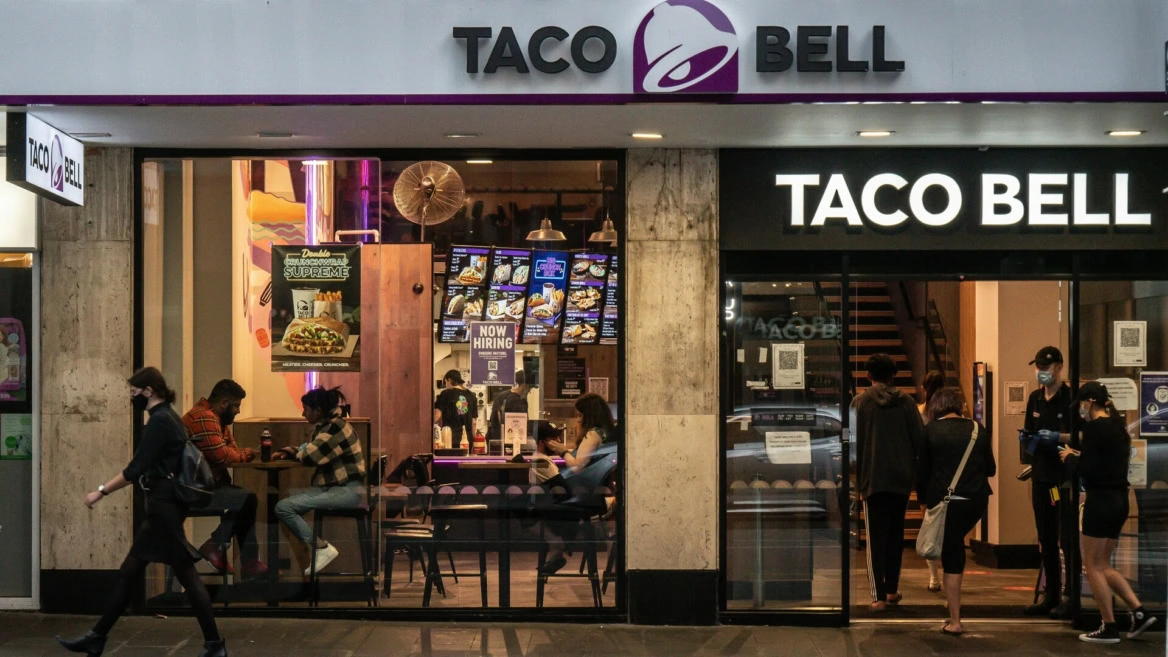

Campana, a Taco Bell franchisee within the SYMBRO Group, plans six new restaurants in the coming months and 12 a year after that, aiming for more than 50 UK sites by 2029. The £20 million programme, backed by HSBC UK, is expected to create around 600 jobs.
Campana runs 23 Taco Bell restaurants across the South West, Wales and the Midlands. The funding package announced on 26 March 2026 is described as an eight-figure investment programme of £20 million, with a revolving credit facility from HSBC UK for flexible access to capital.
The business expects turnover to rise by 50 to 60 per cent as the new sites trade. The six restaurants due in the coming months have not been named by town. The 600 jobs are an expected figure for the programme as a whole, not a count per site, and the release gives no turnover for Campana or the SYMBRO Group and no terms of the franchise agreement.
Where the sites are going
Campana’s growth plan focuses on Wales, the South West along the M4 and M5 corridors, and further areas in and around the Midlands, the multi-site territory model most fast food brands recruiting UK operators expand through. The stated focus is largely the regions where Campana already trades. At 23 existing sites plus six, the estate would reach 29; passing 50 by 2029 means about 21 more beyond that, which fits the stated pace of 12 a year over roughly two further years. None of the six near-term sites carries an opening date in the announcement, so they sit on the watch list rather than the calendar.
The lender’s view
Paul Lane, relationship director at HSBC UK, said the rollout plans highlight the opportunity in the UK’s hospitality sector despite ongoing pressures. The package combines an investment programme with a revolving credit facility, and the borrowing sits with the franchisee rather than with the franchisor.
Good to know: a franchisee’s plan, not the brand’s
The 23-site and 50-site figures are Campana’s own, and cover only the territory it operates. They are not the size of the Taco Bell UK estate, a figure the release does not give.
What the announcement leaves open
The release gives no town for any of the six near-term restaurants, no opening dates and no split of the 600 jobs between sites. It also does not say what share of the £20 million is for fit-out, equipment or working capital.
The signals that would turn the plan into dated openings are the usual ones for a drive-thru or high street unit: a new store page on the brand’s site, a registration on the Food Standards Agency register, a local planning approval and recruitment advertising in the town concerned. The announcement itself publishes none of them for the six sites.