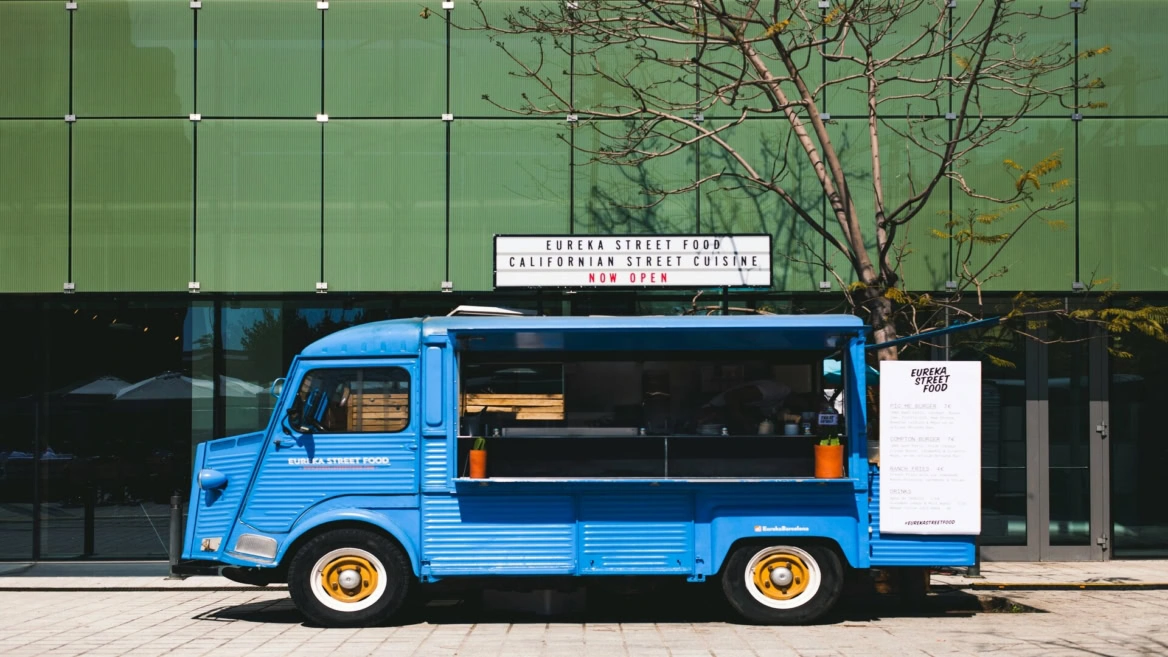

A food truck or street food van in the UK lives or dies on its pitches: the same right to trade costs £517 a year from a district council, £8,219 in Birmingham city centre and up to £13,636 for a prime pitch in Camden, while a private pitch can rent for £50 a week. Every van on LPG also needs an annual CP44 gas certificate from a specialist engineer before most events will let it on site.
Updated in November 2026. The rules below are those of England unless stated, with Scotland, Wales and Northern Ireland covered where they differ. Figures come from council fee schedules, event organisers’ trader terms, vehicles and food van businesses offered for sale, insurer data and the mobile catering trade body’s guidance. A food truck shares much of its regulation with a takeaway, set out in the guide to opening a takeaway; this guide covers what changes when the kitchen has wheels.
Starting a food truck business in the UK: key figures for 2026
- Street trading: council consents from about £517 a year in a district such as North West Leicestershire to £8,219 in Birmingham city centre for 2026/27, with permanent Camden pitches up to £13,636
- Events: from a flat £110 to £550 plus VAT a pitch, to 15% of takings at a council market and up to 35% at some corporate festivals
- Gas: an annual CP44 certificate from a Gas Safe engineer qualified for LPG and mobile catering; new pipework with certification was quoted at about £1,000 to £1,050 in 2026
- Vehicles: used catering trailers from about £6,500 to £12,000, new trailers from about £17,000, converted vans from about £22,500
- Registration: free, with the council where the vehicle is kept, at least 28 days before trading
- Insurance: 10% of catering vans paid £134.07 a year or less with one broker in 2026; its average mobile caterer claim was £21,816
- Break-even: on illustrative figures, about 32 orders of £7.50 a week on a private pitch before the owner is paid, and about 200 to leave the owner about £800
What is a food truck business?
A food truck business sells hot or cold food from a vehicle, a towed trailer or a street stall, at fixed pitches, markets, festivals and private events such as weddings. Its costs differ from a shop in three ways: no rent or business rates on a building, but pitch fees that can run to a share of takings; a kitchen limited by the size, weight and gas set-up of the vehicle; and income concentrated into trading days, which can stop with the weather. A kitchen that cooks only for delivery is a different model, covered in the guide to opening a dark kitchen.


Amigos Burgers & Shakes
Burgers, Shakes, Good Times
- Food – Drink
- 25 Locations
- Liquid capital: £170000


Fat Phill’s
Smash burger restaurant franchise
- Fast Food
- 27 Locations
- Liquid capital: £75000


SpudBros Express
The future of QSR
- Restaurant
- 6 Locations
- Liquid capital: £100000


Griolladh
Fast Irish Comfort Food
- Restaurant
- 13 Locations
- Liquid capital: £50000
How to start a food truck business in the UK, step by step
The checklist, in the order a launch usually runs:
- Format chosen: trailer, converted van or stall, with the driving licence and weight checked
- Pitches lined up and street trading rules checked before the vehicle is bought
- Pitch economics tested: flat fees against percentages, and the terms of any private pitch
- Vehicle bought with its gas, electrical and hygiene paperwork
- Gas certified by a mobile catering engineer, with electrics tested
- Food business registered where the vehicle is kept, and the unit set up for inspection
- Late night and event licences in place where needed
- Menu costed per portion, with VAT and the threshold in view
- Liability and vehicle insurance in place
- Event paperwork ready, staff checked, and private bookings marketed
1. Choose the format: trailer, converted van or stall
The format decides the budget, the licence needed to drive it and the events that will accept it. Vehicles offered for sale on the mobile catering trade body’s classifieds and other listings in 2026 show the range:
| Format | Published prices, 2026 | What to check |
|---|---|---|
| Used catering trailer | About £6,500 to £12,000; one refurbished in March 2026 with £7,250 of equipment and approved by environmental health was offered at £12,000 | Towing weight, braking, and that gas and electrical certificates are current |
| New catering trailer | About £17,000 for a 4 metre unit; £26,000 plus VAT for a 6 metre one listed at £32,000 | Build quality, and whether the gas installation is certified on delivery |
| High-output event trailer | About £50,000 to £90,000 plus VAT for 20 to 28 foot trailers | Tow vehicle, pitch size at events, and staffing |
| Converted van | £22,500 for a 2013 conversion with 84,000 miles; £55,000 for a van converted in 2024 | Gross vehicle weight against the driving licence, and the MOT |
| Factory-fitted new truck | About £30,000 to £50,000 and more, according to a 2026 bank guide | Lead time, warranty, and running costs of a new vehicle |
Sources: mobile catering trade body classifieds and other UK listings, 2026; a UK bank’s 2026 food truck cost guide.
- Towing: since 16 December 2021, drivers with a standard car licence can tow a trailer of up to 3,500kg maximum authorised mass without a separate trailer test
- Van weight: a converted van above 3,500kg needs a C1 entitlement, which licences passed from 1997 onwards do not include automatically; a council gas checklist for mobile caterers asks operators to check the maximum allowable mass of converted vehicles
- Storage: the vehicle needs somewhere to be kept and cleaned, and that address decides which council registers it
2. Line up pitches before buying, and check the street trading rules
Selling from a street, lay-by or public space in England and Wales outside London needs street trading consent wherever the council has adopted Schedule 4 of the Local Government (Miscellaneous Provisions) Act 1982, and the Act’s definition of a street covers areas the public can enter without paying, so a retail car park or forecourt can be caught too. London boroughs license street trading under their own Acts. The fees vary more than any other cost in the trade, as the street trading fees published by Birmingham City Council and other councils’ 2026/27 schedules show:
| Council | Published street trading fee |
|---|---|
| North West Leicestershire | £517 for a new food consent, £484 to renew (2025/26) |
| Hart | £987 for a new annual consent, £629 to renew; £165 for a one-off event of up to 7 days (2026/27) |
| Hull | £2,003.40 a year for hot food and drinks |
| Birmingham | £754 application, then £3,512 a year outside the city centre or £8,219 in it; £497 for under 10 days (2026/27) |
| Camden | £16.86 a day on a casual market for hot food; £7,908 to £13,636 a year for permanent miscellaneous pitches (2026/27) |
| Newport, Wales | £69.35 a day for a mobile trader (2026/27) |
Sources: council fee schedules; Hart and Birmingham 2026/27 pages.
- Read the policy, not just the fee: Hart District Council charges £987 for a new annual consent, but councils also set conditions on hours, siting and which streets are prohibited, and some, such as Hull, ask for a basic DBS check
- Private land: a pitch on private land open to the public can still need consent, and regular trading from the same site can amount to a change of use needing planning permission, so the council is asked before a long agreement is signed
- Scotland: street traders need a street trader’s licence from the council under the Civic Government (Scotland) Act 1982
- Northern Ireland: street trading is licensed by councils under the Street Trading Act (Northern Ireland) 2001

3. Test the pitch economics: flat fees, percentages and private pitches
A food truck pays for its pitch in one of three ways: a council consent, a flat or percentage fee at an event or market, or rent to a private landowner. Organisers’ own 2026 terms show the spread:
| Pitch | Published terms |
|---|---|
| Council street food market, Richmond | £200 plus VAT for a vehicle, or 15% of takings, whichever is greater |
| Council food and drink festival, Lichfield, August 2026 | £550 plus VAT for a standard pitch, plus £40 for the street trading consent the council arranges |
| Street food event organiser | £110 plus VAT a day including electricity, plus 5% of turnover plus VAT |
| Corporate music festivals | Percentages of takings reported at up to 35% |
| Town street festival, St Albans | £72 to £120 for a 3m by 3m pitch |
| Small town market | From £8 for a weekly market pitch to £35 for a midsummer market, Wem |
Sources: council and organiser trader terms, 2025 to 2026; national press reporting of festival terms.
The worked example compares what a pitch costs on a day’s takings under three of those models:
| Takings on the day | Greater of £200 or 15% | £110 plus 5% | 35% of takings |
|---|---|---|---|
| £800 | £200 | £150 | £280 |
| £1,333 | £200 | £177 | £467 |
| £2,500 | £375 | £235 | £875 |
Illustrative, using the published terms above, before VAT on the fees.
A percentage costs little on a quiet day and a great deal on a busy one, which is why the mobile catering trade body’s guidance on tendering for events suggests asking an organiser for a percentage instead of a high flat fee: an organiser confident of the crowd can share the risk. Private pitches look very different. Food van businesses offered for sale show what they pay and take:
| Food van business for sale | Reported figures | Asking price |
|---|---|---|
| Sandwich van on a private pitch, open seven days | Turnover £80,000; gross profit £47,000; pitch rent £50 a week on a rolling agreement | £34,995 |
| Events trailer trading three days a week | Turnover £50,000; net profit £19,000; serves 270 or more toasties a day | £32,500 |
| Showman trailer, weekdays 7am to 2pm, established 2003 | Turnover £37,000; gross profit 50%; net profit £11,000 or more; informal pitch rent £1,150 a year | Not stated |
| Burger business trading at markets and festivals | Turnover about £162,000 (2022 accounts) | £44,995 |
| Burger trailer at a retail site | Turnover £90,000 | £49,995 |
Business-for-sale listings, 2025 to 2026; figures are the sellers’, not audited.
A private pitch at £1,150 to £2,600 a year is a fraction of a city centre consent, but “rolling” and “informal” agreements can be ended by the landowner, and the pitch is usually what the business is worth. When a listing includes a pitch, the agreement and whether it can be transferred are read before any money changes hands.
4. Buy the vehicle with its paperwork
A second-hand food truck is only as good as its certificates. A council gas checklist for mobile caterers recommends a gas safety report before purchase, and a copy of the latest certificate from the seller. The checks before paying:
- Gas: a current CP44 certificate, and an engineer’s report if the installation has been altered
- Electrics: portable appliance testing records and the condition of hook-up leads and any generator
- Hygiene layout: hand-wash basin and sink with hot and cold water, fresh and waste water tanks, and surfaces that can be cleaned
- Road: the MOT for a van, the weight plate, tyres, brakes and lights for a trailer
- History: whether environmental health has inspected the unit before, as in the trailer offered with its March 2026 approval
5. Certify the gas and test the electrics
A food truck on LPG needs an annual mobile catering gas safety record, known as a CP44, which event organisers and councils ask to see. The engineer has to be on the Gas Safe Register with LPG and commercial mobile catering competences for the appliances fitted; the mobile catering trade body warns of certificates issued by engineers working outside their qualifications, which are not valid. The installation follows Liquid Gas UK’s Code of Practice 24 Part 3 for street food and mobile catering.
- Cylinders: stored in a compartment separate from the cooking area with at least 30 minutes’ fire resistance, according to a council gas checklist
- Cost: jobs posted in London in 2026 put new pipework with CP44 certification at about £1,000 to £1,050, and certification alone at about £150
- Staff: everyone handling LPG trained in its safe use, as the trade body’s event checklist asks
- Fire: an extinguisher suited to the appliances and fuel, and a fire blanket by the fryer
- Electrics: tested appliances and leads, and a generator positioned and fuelled away from the serving hatch and the public
6. Register the business and set the unit up for inspection
A mobile food business registers with the council for the area where the vehicle is normally kept, at least 28 days before trading, and that council inspects it and gives it a food hygiene rating. Council guidance for mobile units, such as the mobile catering guide from Norwich City Council, sets out what the inspection looks for:
| What councils check | Detail in council guidance |
|---|---|
| Hand washing | A basin for hands only, with hot and cold running water, soap and hygienic drying |
| Equipment washing | A separate sink with hot and cold water; jugs carrying hot water to the sink are not acceptable |
| Water supply | Food-grade fresh water containers, at least 10 gallons in one council’s guidance, cleaned regularly |
| Waste water | Collected in separate, clearly marked containers and never discharged onto the ground |
| Food areas | No food stored or prepared in the cab; surfaces, floors and walls easy to clean |
| Temperatures | Hot food held at 63°C or above, chilled food at 8°C or below |
| Paperwork | A food safety management system such as Safer Food, Better Business, and allergen information for every item |
Sources: Norwich, Tendring, Bolton, Darlington and Richmondshire council guidance for mobile caterers.
The rating follows the food truck to every pitch, and delivery apps and many events check it. A business can request a re-rating visit after improvements, which many councils in England charge for.
7. License late hours and events
| Situation | Licence and published fees |
|---|---|
| Hot food or hot drinks between 11pm and 5am, England and Wales | A premises licence for late night refreshment, which covers vehicles; £100 to £635 to apply and £70 to £350 a year, set by rateable value band |
| A one-off event, England and Wales | A temporary event notice, £21, for events of up to 168 hours, where the organiser’s licence does not already cover it |
| Food between 11pm and 5am, Scotland | A late hours catering licence under section 42 of the Civic Government (Scotland) Act 1982; £263 in East Ayrshire, £300.30 for a new grant in Angus |
| Selling alcohol from the van | A premises licence or temporary event notice, plus a personal licence holder to authorise sales |
Sources: Licensing Act 2003 fee bands; council fee pages.
Late licences matter for a food truck outside pubs and clubs and at night markets; most daytime pitches and events never need one. The licensing process itself is set out in the guide to opening a bar.
8. Cost every portion, and watch the VAT threshold
Hot food is standard-rated for VAT at 20%, while most cold takeaway food is zero-rated, except confectionery, crisps, ice cream and soft drinks. Registration becomes compulsory once taxable turnover passes £90,000 a year, about £1,731 a week, a level a busy food truck trading year-round can reach, so prices are set with VAT in mind before the van gets busy rather than after. Costing starts at the portion: the guide to opening a takeaway works through a portion of chips at a wholesale price of £2.15 a kilo, and the same method applies to every item on a food truck menu. At events, a food truck’s prices also carry the pitch fee, so a dish that works on a private pitch may not work at a festival taking 25% to 35% of takings.
9. Insure the business and the vehicle
- Liability: one broker’s 2026 data shows 10% of catering vans paying £134.07 a year or less for £10 million of employers’ liability and £2 million of public liability
- Example quotes: £74.07 a year for public liability for a new sole trader serving in a retail car park; £1,242.32 a year for a wedding and functions van run as a limited company
- Claims: the same broker’s average mobile caterer claim was £21,816 between June 2025 and May 2026
- The vehicle: business liability cover does not insure the vehicle; a van or trailer used for catering is declared as such to the motor insurer, with the conversion and equipment included
- Events: organisers set minimum public liability levels in their trader terms, and ask for the certificate with the application
10. Prepare the event paperwork, staff and bookings
- Trader packs: events usually ask for the CP44 gas certificate, public liability certificate, food hygiene rating, a risk assessment and allergen information with the application
- Staff: the National Living Wage is £12.71 an hour at 21 and over from 1 April 2026, and from 1 October 2026 right to work checks cover workers and individual subcontractors as well as employees
- Private hire: weddings, corporate events and parties are booked in advance at an agreed price, which smooths the income from weather-dependent pitches
- Marketing: a social media schedule of where the van is each day, and reviews from events, are how regular customers find a food truck; one events trailer offered for sale lists its website and online booking enquiries among its assets
Amigos Burgers & Shakes
Burgers, Shakes, Good Times
- Food – Drink
- 25 Locations
- Liquid capital: £170000
Fat Phill’s
Smash burger restaurant franchise
- Fast Food
- 27 Locations
- Liquid capital: £75000
SpudBros Express
The future of QSR
- Restaurant
- 6 Locations
- Liquid capital: £100000
Griolladh
Fast Irish Comfort Food
- Restaurant
- 13 Locations
- Liquid capital: £50000
The running costs new owners most often forget
| Running cost | Published example |
|---|---|
| Street trading consent | From about £517 to £8,219 a year, depending on the council and the street |
| Gas certificate | Annual CP44; about £150 for certification alone in 2026 London job postings |
| Insurance | From £134.07 a year for the cheapest 10% of catering vans with one broker; £1,242.32 for a wedding and functions van |
| Private pitch rent | £1,150 to £2,600 a year in the businesses offered for sale |
| Event fees | £110 to £550 plus VAT a pitch, or 5% to 35% of takings |
| Re-rating visit, if needed | £183 to £371.32 in English councils’ 2026/27 schedules |
| Vehicle | MOT, servicing, fuel, tyres and motor insurance for a commercial use |
Sources: council fee schedules; broker data, 2026; business-for-sale listings; organiser terms.
- Weather and season: outdoor trade falls in winter and on wet days, so private bookings and indoor markets carry the quiet months
- Commissary and storage: somewhere to store stock, clean equipment and fill water tanks, which a home kitchen used for business may need to be registered for
- Waste: food waste, packaging and waste water removed from every pitch, with the single-use plastics ban in England applying to vans as to shops
- Contingency: a reserve for breakdowns, which stop trading entirely when the kitchen is the vehicle
How long it takes to start a food truck business
| Step | Timescale |
|---|---|
| Pitches and street trading consents | Applications are assessed before consent is granted, and some councils consult before deciding; prime pitches can have waiting lists |
| Vehicle purchase or conversion | A ready-fitted unit trades at once; a self-conversion takes weeks to months |
| Gas installation and CP44 | Booked with a mobile catering engineer, who can be hard to find in some areas |
| Food business registration | At least 28 days before trading, with the council where the vehicle is kept |
| First hygiene inspection | Councils aim to inspect new businesses within 28 days of registration or opening |
| Late night licence, if needed | 28 days for representations after the application is advertised |
| Event applications | Festivals open applications months ahead and select traders, so the first season is booked in winter and spring |
Sources: council guidance; licensing and food law timescales; organiser application windows.
Types of food truck business
| Type | How it trades |
|---|---|
| Fixed-pitch van or trailer | The same site most days, often breakfast and lunch for workers and passing trade |
| Event and festival trader | Markets, festivals and shows, with high takings on good days and pitch fees or percentages |
| Private hire caterer | Weddings, parties and corporate events at a pre-agreed price |
| Coffee van | Lower food safety risk, fast service and early starts at stations, sites and offices |
| Street food market stall | A gazebo pitch at a regular market, with the lowest set-up cost |
| Franchised mobile unit | A brand, equipment and supply chain, against fees set in the agreement |
L’Express Franchise, November 2026.
How much does it cost to start a food truck business?
No official UK average start-up cost exists. The published lines that apply:
| Cost line | Published figure |
|---|---|
| Vehicle | About £6,500 for a used trailer to £55,000 for a recently converted van; £30,000 to £50,000 and more for a factory-fitted new truck |
| Gas installation and certification | About £1,000 to £1,050 for new pipework with a CP44, 2026 London job postings |
| Street trading consent | About £517 to £8,219 a year |
| Food business registration | Free, 28 days before trading |
| Insurance | From £134.07 a year for liability, plus motor insurance |
| Late night refreshment licence, if needed | £100 to £635 to apply, £70 to £350 a year |
Sources: listings; job postings; council fee schedules; broker data; licensing fee schedule.
A week on a private pitch
The worked example takes a food truck trading five days a week on a private pitch, taking £1,500 a week, below the VAT threshold, with food and packaging at 35% of takings and the owner working alone:
| Weekly line | Figure |
|---|---|
| Takings | £1,500 |
| Food and packaging at 35% | £525 |
| Pitch rent, as in the sandwich van offered for sale | £50 |
| LPG and fuel | £60 |
| Insurance, from £134.07 a year | £3 |
| Card fees on 70% of takings | £18 |
| Phone, waste, cleaning and other costs | £40 |
| Left for the owner | About £804 a week, about £38,600 over 48 trading weeks |
Illustrative inputs except the pitch rent, insurance figure and card fee rate, L’Express Franchise, November 2026. Before Income Tax and National Insurance, and before vehicle depreciation.
The £804 pays for the owner’s own hours, which include buying stock, preparation and cleaning down as well as serving. At the same pitch in a city centre, a consent of £8,219 a year would take about £158 a week, a fifth of what is left.
How many orders a food truck needs
On the same assumptions, each £1 of takings leaves about 64p after food, packaging and card fees, against weekly fixed costs of about £153. Turned into orders of £7.50:
| Target | Weekly takings needed | Orders of £7.50 a week | Orders a day, five days |
|---|---|---|---|
| Cover the costs, owner unpaid | About £240 | About 32 | About 6 |
| Pay the owner £500 a week | About £1,023 | About 136 | About 27 |
| Pay the owner about £804 a week | About £1,500 | About 200 | About 40 |
Illustrative, using the weekly example above; every order assumed at £7.50.
Forty orders a day is the figure to test against a pitch before signing: how many people pass at breakfast and lunch, and how many other vans and cafés serve them. The events trailer offered for sale serving 270 toasties a day shows what a busy event can do; a quiet lay-by may never reach 40.
Starting a food truck on a lower budget
The lowest-cost route into a food truck business is a used trailer with current gas and electrical certificates, towed by an existing vehicle on a standard car licence, trading at markets and events before committing to a fixed pitch. For franchise options at lower entry points across all sectors, see low cost franchises in the UK.
Starting a food truck business through a franchise
A franchise is the other route into mobile food. Franchising in the UK has no franchise statute or disclosure law, as set out in what a franchise is, so what a franchise provides and charges is set by each agreement. What mobile franchisors typically supply:
- A fitted vehicle built to the brand’s specification, often with finance arranged
- A brand and menu customers recognise at events and on fixed rounds
- Suppliers for coffee, food and packaging at network prices
- A territory or round of sites, offices or events
- Training in operations, food safety and the equipment
What a franchise costs on top of the van
Ongoing fees come on top of the vehicle: published franchise law guidance puts management service fees, or royalties, commonly at 5% to 8% of turnover, plus a marketing levy of 1% to 3%; some mobile franchises charge a fixed monthly fee instead. The worked example compares the same food truck at £1,500 a week, run independently and as a franchise paying 6% in royalty and 2% for marketing:
| Weekly line | Independent | Franchise at 6% plus 2% |
|---|---|---|
| Takings | £1,500 | £1,500 |
| Royalty and marketing levy | None | About £120 |
| Left for the owner | About £804 | About £684 |
| Takings needed to leave the owner £804 | £1,500 | About £1,715, 14% more |
Illustrative, using the weekly example above; fee rates from published UK franchise law guidance.
The question is whether the brand, the sites and the supply prices bring at least 14% more trade than the same food truck would take alone. The answer comes from what existing franchisees with similar rounds take, and from how the fees are charged.
Mobile food franchise opportunities in the UK
Mobile coffee franchises listed on L’Express Franchise under coffee franchises publish these figures on their listings; more food formats are listed under fast food franchises:
Amigos Burgers & Shakes
Burgers, Shakes, Good Times
- Food – Drink
- 25 Locations
- Liquid capital: £170000
Fat Phill’s
Smash burger restaurant franchise
- Fast Food
- 27 Locations
- Liquid capital: £75000
SpudBros Express
The future of QSR
- Restaurant
- 6 Locations
- Liquid capital: £100000
Griolladh
Fast Irish Comfort Food
- Restaurant
- 13 Locations
- Liquid capital: £50000
Cafe2U lists 85 sites. For a fixed coffee business rather than a van, see the guide to opening a coffee shop; for a wood-fired pizza trailer, the guide to opening a pizzeria covers the oven and the menu.
Editor’s tip
Before buying a food truck business, separate the vehicle from the pitch. Ask for the pitch agreement in writing, whether it can be transferred to a new owner, and how much notice the landowner can give; then check the street trading consent, which is personal to the holder and does not pass with the van. Finally, ask for the CP44 certificate and the last hygiene inspection report, since a van that fails either cannot trade on the day it is bought.
The practical difficulties operators report
- Pitches are the business: good fixed pitches are scarce, prime council consents cost thousands a year, and private agreements are often informal
- Percentages bite on good days: at 35%, a £2,500 festival day costs £875 in fees
- Specialist gas engineers are hard to find: only engineers with LPG and mobile catering competences can certify a van
- Weather and season: outdoor trade drops in winter and on wet days, with no rent saved
- One breakdown stops everything: when the kitchen is the vehicle, a flat tyre or failed generator ends the day
- The VAT step: a busy food truck passing £90,000 a year pays 20% on hot food from then on
The bottom line
Starting a food truck business in the UK means registering with the council where the vehicle is kept 28 days before trading, certifying the gas with a CP44 from a mobile catering engineer, and securing pitches: street trading consents from about £517 to £8,219 a year, event fees from £110 to 35% of takings, or a private pitch from £1,150 a year. Used trailers start at about £6,500 and converted vans at about £22,500. On illustrative figures, a van taking £1,500 a week on a private pitch leaves its owner about £804, which takes about 40 orders a day over five days; a franchise at 6% and 2% needs about 14% more takings to leave the same.
Frequently asked questions about starting a food truck business in the UK
A food truck registers with the council where the vehicle is kept, free, at least 28 days before trading. Trading in the street needs street trading consent or a licence from each council where it trades, and selling hot food between 11pm and 5am needs a late night refreshment licence in England and Wales, or a late hours catering licence in Scotland.
No official average exists. Used catering trailers sell for about £6,500 to £12,000, new trailers from about £17,000 and converted vans from about £22,500, while new pipework with a gas certificate was quoted at about £1,000 to £1,050 in 2026. Street trading consents add about £517 to £8,219 a year.
Councils set their own fees. For 2026/27, Hart charges £987 for a new annual consent, Birmingham £3,512 a year outside the city centre and £8,219 in it after a £754 application fee, and Camden up to £13,636 for a permanent pitch. North West Leicestershire charged £517 for a food consent in 2025/26.
Yes, where it uses LPG. The van needs an annual CP44 mobile catering gas safety record from a Gas Safe engineer qualified for LPG and commercial mobile catering, and event organisers and councils ask to see it.
It varies widely. Food van businesses offered for sale report turnovers from £37,000 to about £162,000 a year. On illustrative figures, a van taking £1,500 a week on a private pitch leaves its owner about £804 a week before tax.
Terms vary: a council street food market in Richmond charges £200 plus VAT or 15% of takings, whichever is greater; one street food organiser charges £110 plus VAT a day plus 5% of turnover; and some corporate festivals take up to 35% of takings.
Since 16 December 2021, drivers with a standard car licence can tow a trailer of up to 3,500kg maximum authorised mass without a separate test. A converted van above 3,500kg needs a C1 entitlement.
With the council for the area where the vehicle is normally kept or garaged, at least 28 days before trading. That council inspects the van and gives it a food hygiene rating, which follows it to every pitch.
Only once registered. Registration is compulsory above £90,000 of taxable turnover a year, about £1,731 a week. Once registered, hot food is standard-rated at 20%, while most cold takeaway food is zero-rated.
No. Trading in a street needs consent from the council, some streets are prohibited, and private land open to the public can also need consent. Regular trading from one private site can need planning permission, and the landowner’s permission is always needed.
One broker’s 2026 data shows 10% of catering vans paying £134.07 a year or less for employers’ and public liability, with quotes from £74.07 a year for a new sole trader to £1,242.32 for a wedding and functions van. Motor insurance for the vehicle is separate.
It depends on the uplift. Mobile coffee franchises such as Cafe2U, with £15,000 of liquid capital and £42,500 total investment, and Really Awesome Coffee, with £10,000, supply a van, brand and suppliers. At 6% royalty and 2% marketing, a franchised van needs about 14% more takings to leave the owner the same as an independent one.