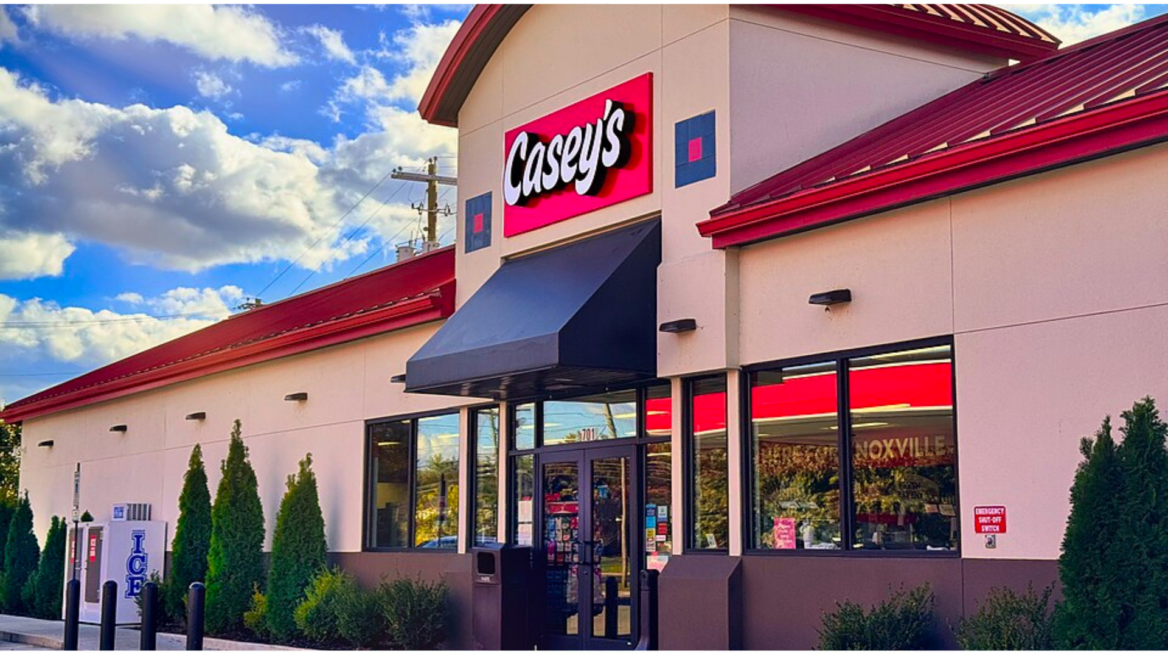

Casey’s General Stores is erasing the CEFCO brand from 198 convenience store locations across the southern United States, the latest chapter in a wave of consolidation that is rapidly concentrating the US c-store market in the hands of a few large corporate chains. The shift is changing the competitive landscape for any operator, franchised or independent, considering entry into the gas station and convenience store sector.
The United States has 151,975 convenience stores, according to the 2026 NACS/NIQ TDLinx Convenience Industry Store Count. Despite the dominance of major chains by name recognition, the sector remains structurally fragmented: 63% of all US c-stores are owned by a company operating 10 or fewer locations, according to the same NACS data. That pool of small, often family-owned operators is now the primary target of an accelerating acquisition cycle driven by chains like Casey’s, Circle K and Couche-Tard.
Casey’s Converts 198 CEFCO Stores After a $1.145 Billion Acquisition
Casey’s General Stores purchased Fikes Wholesale Inc., the parent entity of CEFCO Convenience Stores, in an all-cash transaction for $1.145 billion, net of approximately $165 million in tax benefits. Since the deal closed, Casey’s has been remodeling CEFCO locations and rebranding them under the Casey’s banner. During its Q1 FY27 earnings call on September 9, 2026, CEO Darren Rebelez reported that 50 CEFCO stores were remodeled in fiscal year 2026 and 24 more were completed in the first quarter of fiscal year 2027. Remodeled locations recorded an average performance lift of 30% versus the same period prior to remodel. Casey’s now operates 2,959 stores across 19 states as of July 31, 2026.
A Consolidation Wave Erasing Regional Brands Across the US
The CEFCO rebrand is part of a broader pattern. GetGo was sold to Circle K. Redwood Markets was acquired by Jacksons. Kum & Go, a chain of approximately 400 locations, was purchased by Maverick. In each case, the original banner has been retired or is in the process of being replaced. Casey’s is also in the process of acquiring the 22-site Lone Star Food Stores chain and the 24-location Pak-A-Sak brand, adding further regional names to its conversion pipeline.
Industry analysts at CStore Dive have noted that small and family-owned operators are finding it increasingly difficult to compete. “There still remains a large number of chains out there in the 10 to 100 store range that, depending on what their long-term strategy is, especially if they’re family-owned businesses, may decide that they want to get out,” says Rob Gallo, Chief Strategy Officer at Impact 21. “It’s just more difficult to manage the chain if you’re a small operator compared to the big guys, especially with the consolidation going on across the country and in many cases, in their backyards,” adds Jesse Betzner, Senior Director at Capstone Partners.
What This Means for Entrepreneurs Considering the C-Store and Gas Station Sector
The consolidation wave has direct implications for anyone evaluating entry into the convenience store and fuel retail sector. As corporate chains absorb regional brands, the number of independent operators who could serve as entry-level acquisition targets for prospective buyers is shrinking.
At the same time, the competitive pressure facing any new entrant, including franchised operators, is rising. The three largest chains by store count, 7-Eleven (12,700 US locations), Couche-Tard/Circle K (7,308 locations) and Casey’s (2,959 locations and growing), are all expanding. Among those, 7-Eleven is the only major player in the sector that operates a franchise model open to outside investors in the United States.
BP’s ampm brand also offers a franchise option in select US markets. For entrepreneurs seeking brand support and supply-chain scale without joining a company-owned chain, franchise affiliation with an established c-store network remains one of the available routes in a market undergoing significant structural change.
Frequently Asked Questions
Yes. 7-Eleven is the largest franchise-based convenience store network in the United States, with more than 12,700 locations. BP’s ampm brand also operates as a franchise in select US markets. Several regional and fuel-affiliated franchise concepts exist as well. Most of the other large chains in the sector, including Casey’s and Circle K, operate primarily through company-owned stores rather than a traditional franchise model.
Industry analysts and executives point to two converging factors. First, small and family-owned c-store operators are finding it increasingly difficult to compete against large chains on purchasing scale, technology investment, and labor management. Second, large chains view acquisition as a faster path to growth than building new stores. Casey’s CEO Darren Rebelez characterized the current acquisition environment as “really good” from a buyer’s perspective during the company’s Q1 FY27 earnings call in September 2026, citing the financial pressure on smaller operators as a key driver.
This content is provided for informational purposes only and does not constitute legal, tax, financial, or professional advice. Laws and regulations vary by state and individual circumstances and may change over time. Readers should consult a qualified attorney, tax professional, or other licensed professional regarding their specific situation. Nothing herein creates an attorney-client relationship.