


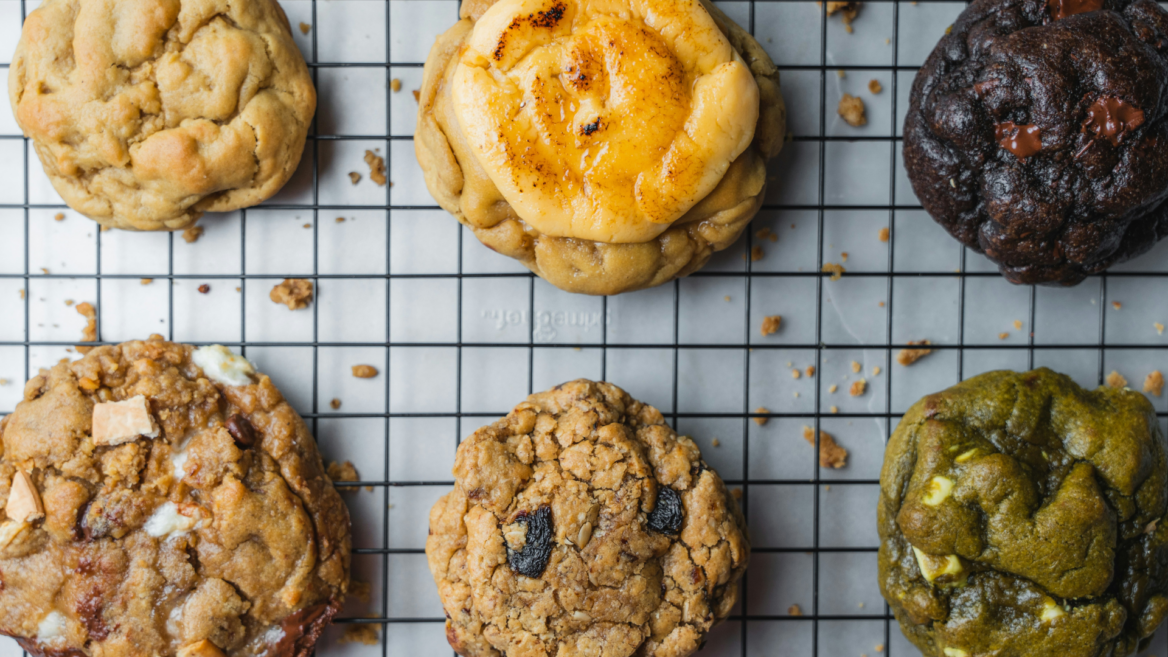

Insomnia Cookies passed its 350th location in November 2025 and projects more than 75 openings in 2026. Not one of them will be sold to a franchisee. The late-night cookie chain has no franchise program in the United States, and the reason says something about how fast-growing food brands are funded today. Here is the model, the ownership, and the cookie franchise brands that are open.
The confusion is understandable. Insomnia sits on the same campus corners as chains that sell franchises by the dozen, and it opens at a pace that usually signals franchisee money. Under the FTC Franchise Rule, 16 CFR Part 436, a relationship counts as a franchise only when three elements appear together: a trademark license, significant control over the operator’s method of operation, and a required payment of $500 or more before or within six months of opening. Insomnia’s growth runs on a different mechanism.
What is Insomnia Cookies?
Insomnia Cookies started in 2003 as a student delivery run: Seth Berkowitz was at the University of Pennsylvania, and the idea was warm cookies at the hour dining halls are shut. That hour is still the concept. Most bakeries serve until 3 a.m., locations cluster around campuses, and the menu now runs to cookie cakes, brownies and ice cream.
The company reported 350 bakeries in the U.S., Canada and the U.K. in November 2025, and states a long-term target of 1,800 worldwide. It has also moved into venues such as Philadelphia International Airport and arenas hosting the Flyers and the Knicks.
Is Insomnia Cookies a Franchise Company?
No, Insomnia Cookies Does Not Operate as a Franchise System
There is no franchise development page, no franchise disclosure document for candidates, and no application to fill in. The evidence sits in the fiscal 2022 annual report Krispy Kreme filed with the SEC while it still owned the brand: every Insomnia bakery appears in the company-owned column of the group’s points of access. A company selling franchises has an Item 20 outlet table to show. This one has none.
How the Company Is Structured and Operates
Every bakery is run by the company, staffed by employees, with delivery handled in house. The expansion capital comes from owners rather than operators, and those owners have changed twice in two years. Krispy Kreme bought the brand in 2018, then exited in two steps: on July 17, 2024 it sold a majority stake to Verlinvest and Mistral Equity Partners at a $350 million enterprise value, keeping roughly 34%. In June 2025 it sold the rest back for $75 million.
Verlinvest and Mistral now control a privately held company, and the 75 openings projected for 2026 are funded from that balance sheet. “What makes Insomnia both unique and enduring is the community,” says Seth Berkowitz, Founder and CEO of Insomnia Cookies.
Good to know
An airport or arena location is not a franchise. Sites inside a transport hub or a stadium are arranged with the operator holding the venue’s concession rights, and are not offered to individual candidates. Under the FTC Franchise Rule, all three elements must be present, whatever the contract is called.
Cookie Brands in the U.S. That Operate as Franchises
While you can’t open an Insomnia Cookies franchise in the U.S., several brands in the cookie space do franchise and are actively looking for new franchisees. Here are a few examples:

Crumbl Cookies
Cookies Make People Happy.
- Restaurant
- Not disclosed
- Liquid capital: $Not disclosed
Twisted Sugar
Straight A's in Sweetness
- Restaurant
- Not disclosed
- Liquid capital: $Not disclosed
Cookie Plug
Boss Up. Build an Empire. Own a Cookie Plug
- Restaurant
- Not disclosed
- Liquid capital: $Not disclosed

Dirty Dough
Life is Sweet!
- Restaurant
- Not disclosed
- Liquid capital: $Not disclosed
Where cookie franchise figures actually come from
Item 7 of a Franchise Disclosure Document gives the estimated initial investment as a low-to-high range, line by line, including additional funds for the opening period. Item 19, the financial performance representation, is optional: when present, it describes past outlet performance, not a projection.
The independent route is the other one present in the market: no trademark license, no system fee, no royalty, and none of the supply chain that comes with them. The U.S. Small Business Administration documents the 7(a) and 504 loan programs used by lenders in both cases.
Frequently asked questions about opening an Insomnia Cookies
No. There is no offer, no disclosure document for candidates and no application process. The bakeries are company-operated, and expansion is funded by the brand’s owners rather than by franchise fees.
Verlinvest and Mistral Equity Partners acquired a majority stake from Krispy Kreme in July 2024, at a $350 million enterprise value. Krispy Kreme sold its remaining stake in June 2025 for $75 million, completing its exit from the brand.
Crumbl, Great American Cookies, Mrs. Fields, Dirty Dough and Chip City all franchise in the United States. Their published investment ranges run from roughly $153,600 at the low end to more than $1.4 million at the high end, depending on the brand and the format.
This content is provided for informational purposes only and does not constitute legal, tax, financial, or professional advice. Laws and regulations vary by state and individual circumstances and may change over time. Readers should consult a qualified attorney, tax professional, or other licensed professional regarding their specific situation. Nothing herein creates an attorney-client relationship.