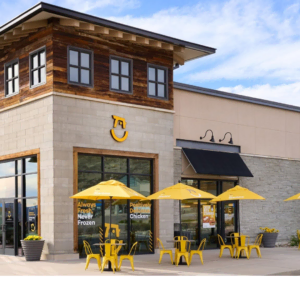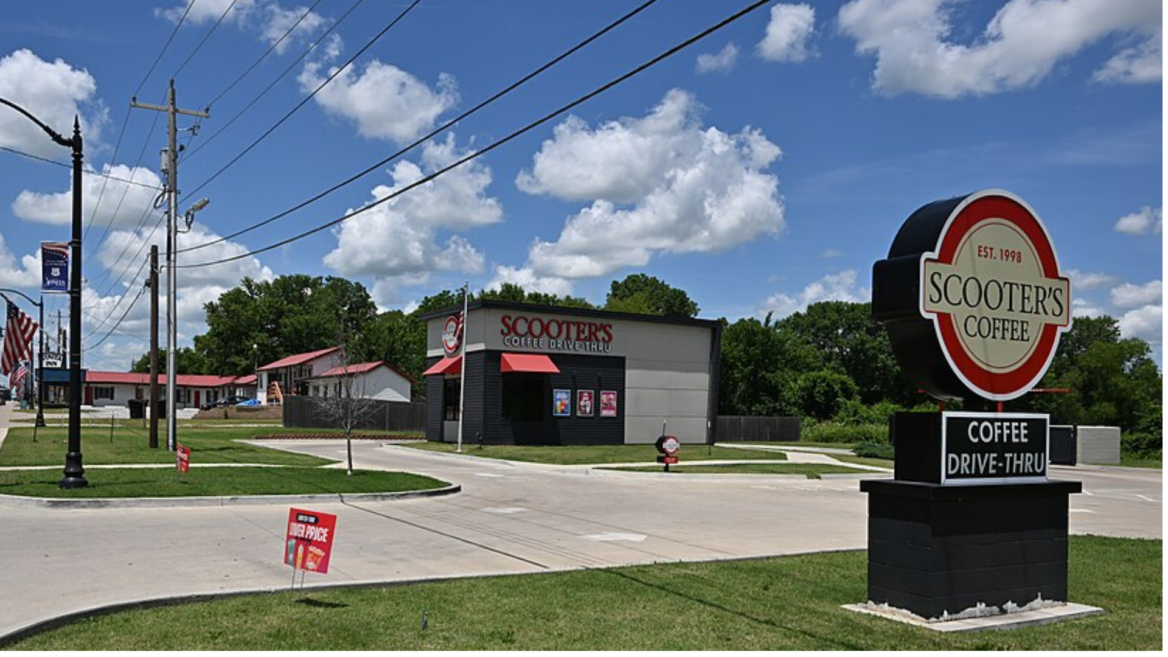

Scooter’s Coffee, which has grown from a single drive-through in Bellevue, Nebraska in 1998 to more than 930 locations across 32 states with $875 million in systemwide sales, announced on October 1, 2026 that M-One Capital had completed an equity recapitalization increasing its ownership stake in the coffee shop franchise brand. The move follows a $375 million whole business securitization the company completed in June 2026, making October’s transaction the second significant capital event in four months.
Scooter’s Coffee operates 930 locations across 32 states, with 98% of the system franchised. The brand has recorded a compound annual growth rate of more than 40% since 2019. M-One Capital, a private equity firm, has held a stake in the company since 2018. The October 2026 transaction was structured as a single-asset continuation vehicle, a format private equity firms use to extend their hold on high-performing assets while offering liquidity to existing investors. The recapitalization increased M-One Capital’s ownership position in the brand.

Scooter’s Coffee
Amazing People, Amazing Drinks… Amazingly Fast!
- Restaurant
- Not disclosed
- Liquid capital: $Not disclosed
A $375 Million Securitization in June Set the Financial Context
In June 2026, Scooter’s Coffee completed a $375 million whole business securitization (WBS), structured with $350 million in Class A-2 term notes and a $25 million variable funding note. The securitization, advised by Kirkland & Ellis, was backed by the company’s franchise agreements, intellectual property, and its Harvest Roasting division, the vertically integrated coffee roasting and supply chain operation the brand controls directly.
Proceeds from the transaction were used to refinance existing corporate debt. Whole business securitizations are a financing structure in which a brand’s royalty streams and contract rights serve as collateral for rated debt securities, a format used by a small number of franchise systems to access lower-cost debt capital markets.
Two Transactions, Four Months, One Overhauled Capital Structure
The combination of a June WBS and an October equity recapitalization represents a comprehensive restructuring of Scooter’s Coffee capital stack in a single fiscal year. The debt layer, now backed by franchise royalties and the Harvest Roasting division, provides long-term fixed-rate financing. The equity recapitalization adjusts the ownership structure at the top. No trade publication appears to have connected these two transactions at the time of this article’s publication.
The company has described the financial transactions as providing resources to continue investing behind the brand, its franchisees and its operating platform. Scooter’s Coffee has not publicly disclosed specific targets for unit count or revenue in connection with the October announcement.
Harvest Roasting and the Franchise System’s Vertical Integration
The inclusion of Harvest Roasting as collateral in the June securitization is a detail worth noting for franchise observers. By securitizing the roasting division alongside its franchise agreements, Scooter’s Coffee tied the financial value of its supply chain infrastructure directly to its debt structure.
This creates an alignment between the brand’s vertical integration strategy and its capital markets activity that is uncommon among drive-through coffee concepts. The majority of Scooter’s Coffee competitors source their roasted coffee from third-party suppliers. Harvest Roasting gives the brand direct control over product consistency and supply chain costs, and the securitization puts a formal institutional value on that control.
This content is provided for informational purposes only and does not constitute legal, tax, financial, or professional advice. Laws and regulations vary by state and individual circumstances and may change over time. Readers should consult a qualified attorney, tax professional, or other licensed professional regarding their specific situation. Nothing herein creates an attorney-client relationship.