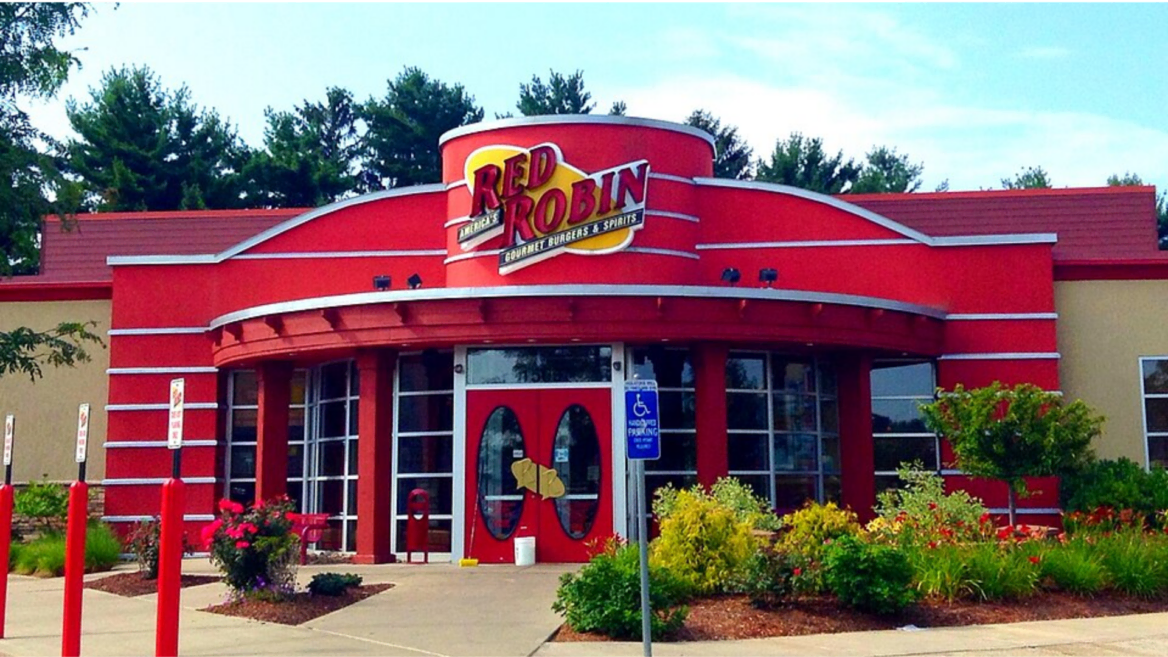

Red Robin Gourmet Burgers completed a $115 million refinancing on October 2, 2026, closing a new five-year credit facility led by JPMorgan Chase that matures in October 2031. The casual-dining franchise chain says the refinancing provides greater financial flexibility to support its turnaround plan. The transaction follows the completion of the brand’s refranchising program, through which it divested 116 company-operated restaurants for approximately $96 million in less than 12 months.
The refinancing marks the conclusion of what Red Robin‘s leadership calls the “First Choice Plan,” a strategic pivot designed to convert the brand from a primarily corporate-operated chain into a franchise-led system. In June 2026, L’Express Franchise reported on Red Robin’s sale of 30 Northwest locations to Evergreen Dining LLC, one of the first significant transactions in the refranchising cycle.
The program has since expanded to include three additional franchise groups: Op Burgers LLC, Kuber Oregon LLC, and Kuber Washington LLC. Combined, the four agreements account for 108 restaurants sold to franchise operators for $89.4 million, with eight additional locations closed for $6.6 million in associated proceeds, bringing total divestiture receipts to approximately $96 million.
A $115 Million Facility With Five-Year Visibility
The new credit facility, arranged by JPMorgan Chase Bank as administrative and collateral agent and Texas Capital Bank as documentation agent, consists of a $90 million term loan and a $25 million revolving credit line. Pricing is set at SOFR plus 275 to 350 basis points depending on the company’s leverage ratio, with an initial rate of SOFR plus 325 basis points. The facility matures on October 2, 2031, and includes an option to expand available capacity by an additional $20 million. Proceeds are designated for repayment of prior debt obligations, working capital, capital expenditures, and future permitted acquisitions.
116 Restaurants Divested, a Franchise-Led Network of 500
The refranchising program covered 116 company-operated locations in total. Of those, 108 were sold to franchise operators for $89.4 million, while eight additional restaurants were closed, generating $6.6 million in associated proceeds. The combined receipts reduced Red Robin’s owned real estate obligations and repositioned the brand around royalty income and franchise support rather than direct restaurant operations. Red Robin operates approximately 500 locations across the United States and Canada, a network now composed primarily of franchise-operated units following the completion of the refranchising cycle.
A Shift Several Casual Dining Chains Are Making
Red Robin’s trajectory reflects a pattern gaining traction across casual dining. Asset-light models, in which a brand licenses its name and operating systems to independent franchise operators rather than owning and staffing restaurants directly, have been pursued by multiple chains as a way to reduce fixed cost exposure. The approach shifts occupancy costs, labor obligations, and capital expenditure requirements onto franchisee operators while generating more predictable royalty and fee income for the franchisor.
For current and prospective Red Robin franchisees, the end of this restructuring cycle carries a concrete signal: the brand has worked through a significant operational transition, and the five-year credit agreement establishes a defined financial framework through 2031.
This content is provided for informational purposes only and does not constitute legal, tax, financial, or professional advice. Laws and regulations vary by state and individual circumstances and may change over time. Readers should consult a qualified attorney, tax professional, or other licensed professional regarding their specific situation. Nothing herein creates an attorney-client relationship.