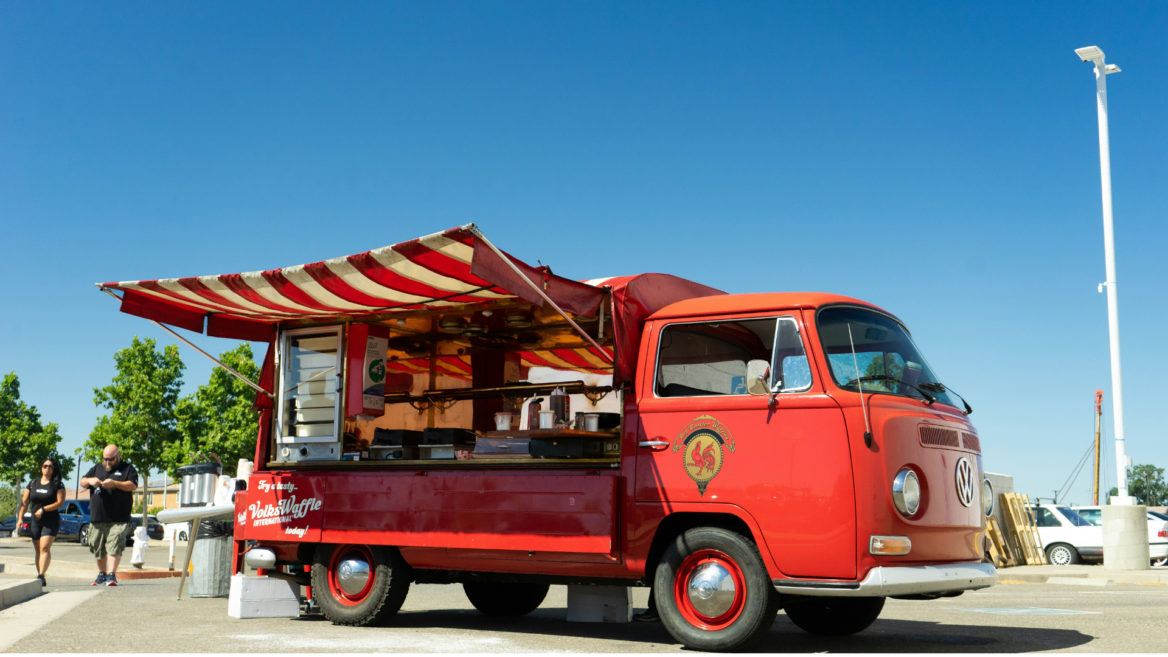

The US food truck industry generated approximately $2.8 billion in revenue in 2025 and now counts more than 92,000 operating businesses nationwide, according to IBISWorld. With lower overhead than traditional restaurants and profit margins industry data places around 6.8%, the food truck model has attracted a growing number of operators. This article covers what the startup process typically involves, from concept definition to opening day, including costs, permits, and franchise options in the food truck sector.
Can Anyone Start a Food Truck Business?
No specific degree or professional license is required to start a food truck business in the US. However, operators are generally required to obtain a range of permits and licenses before serving the public, and these requirements vary significantly by state, county, and city.
Most jurisdictions require at minimum a food handler’s certification, a business license, and a health department permit. The regulatory workload involved means that most operators spend several months preparing before their first day of service.
8 Steps to Start a Food Truck Business in the US
Step 1 – Define the Concept, Business Structure, and Target Audience
Defining a clear food concept is typically the starting point for new food truck operators. Common models include specialty cuisines (tacos, lobster rolls, gourmet burgers), dietary-focus menus (vegan, gluten-free), or dessert and beverage trucks.
Alongside the menu concept, operators generally select a legal business structure. Sole proprietorship, LLC, and S-corp are among the most common choices for small business formation in the US, each with different tax and liability implications.
Identifying a primary customer demographic, such as downtown office workers, college students, or event attendees, also informs location strategy and menu pricing.
Step 2 – Create a Business Plan
A business plan is the document most lenders and investors request before providing financing. According to the US Small Business Administration (SBA), a standa69. rd business plan typically includes:
- an executive summary,
- company description,
- market analysis,
- organizational structure,
- product description,
- marketing and sales strategy,
- funding request,
- financial projections and an
- appendix for supporting documents.
Food truck business plans also commonly address commissary arrangements, operating territory, event scheduling, and seasonal revenue variations.
Step 3 – Find a Location
Food truck operators do not operate from a fixed address, but location strategy is considered central to revenue generation.
- High-traffic zones,
- downtown business districts,
- college campuses,
- farmers markets,
- food truck parks, and
- event venues –
are among the most commonly cited operating areas.
Zoning laws and municipal parking restrictions vary by city. Operators are generally required to obtain location-specific vending permits before setting up, and some cities limit the number of permits available in a given area. Checking with the local motor vehicle department and city planning office is part of the standard due diligence process for new operators.
Step 4 – Secure Permits and Licenses
Permits and licenses represent one of the most administratively complex elements of starting a food truck business. Requirements are set simultaneously at the federal, state, county, and city levels. According to the New York Food Truck Association (NYFTA), the permits and licenses food truck operators most commonly need include:
- Business license — Issued at the state and/or city level. Application fees typically range from $50 to $500, according to NYFTA, though ongoing annual fees may apply depending on the jurisdiction.
- Driver’s license — Required for any operator who drives the truck. Some states require a commercial driver’s license depending on the vehicle’s weight class.
- Vehicle registration — Many states require commercial vehicle registration for food trucks, separate from standard personal vehicle registration.
- Food handler’s permit — Certifies that food preparers have completed an approved food safety course. The FDA maintains a state-by-state database of retail food service codes and regulations at fda.gov.
- Employer Identification Number (EIN) — Issued by the IRS, the EIN functions as the business’s federal tax identification number. It is typically required before applying for most other business licenses and permits.
- Health department permit — Certifies that the truck itself meets food safety and cleanliness standards. This generally involves a physical inspection of the vehicle, workstations, equipment, and storage.
- Fire certificate — Required in most states for trucks that use heat to prepare food. Inspectors typically verify that gas lines and heat equipment are properly installed and that fire suppression systems are in place.
- Commissary letter of agreement — Some cities and counties require food truck operators to use a licensed commissary, a commercial food preparation facility, for daily prep and storage. A signed agreement with the commissary is part of the permit application in those jurisdictions.
- Reseller’s permit and seller’s permit — A reseller’s permit allows operators to purchase ingredients without paying sales tax at the point of purchase. A seller’s permit (or sales and use permit) authorizes the collection of sales tax from customers, as required by state law.
Permit costs and processing times vary widely across the US. In New York City, for example, mobile food vending permits have historically involved long waitlists due to caps on the number issued. Many new operators consult a local attorney familiar with food truck regulations to confirm compliance before committing to a location or launch date.
Step 5 – Procure Supplies and Equipment
The truck itself is the largest single cost item for most operators. New custom-built trucks typically range from $100,000 to $200,000, while used trucks can be found in the $40,000 to $100,000 range, according to
The Bottom Line by Square. Commercial cooking equipment, refrigeration units, a point-of-sale (POS) system, branded wraps or signage, and initial food inventory represent additional procurement costs. Some operators purchase used equipment to lower initial outlay.
Step 6 – Organize Operations and Hire Staff if Necessary
Operational setup typically involves establishing supplier relationships, arranging a commissary if required by local regulations, setting service hours, and configuring payment processing.
Operators who plan to hire staff are generally required to register as an employer with the IRS using their EIN, comply with federal and state labor laws (including minimum wage requirements and overtime rules), and establish a payroll system. Some food trucks operate as solo ventures, particularly in the early stages, while others hire one to three additional staff members.
Step 7 – Launch Marketing
Social media is the primary marketing channel for most food truck operators, given its low cost and ability to broadcast real-time location updates to followers. Platforms such as Instagram and TikTok are widely used to showcase menu items and announce upcoming appearances.
Other common strategies include SMS marketing for return customers, participation in local food truck events and festivals, and partnerships with nearby businesses such as breweries, office parks, or coffee shops that do not serve food.
Step 8 – Open Your Food Truck Business
The pre-launch period typically includes a final health inspection, an operational test run of all equipment, and a soft launch to collect early customer feedback before moving to a full schedule. Many operators also apply for participation in local food truck directories and event registries during this phase to build their initial calendar of appearances.
Is It Also Possible to Open a Food Truck Business as a Franchise?
Franchising represents one established pathway into the food truck sector. Several US franchise brands offer food truck franchise models, providing franchisees with a recognized brand, standardized operating systems, supplier networks, and initial training in exchange for a franchise fee and ongoing royalties. Below are some of the best-known food truck franchise brands currently operating in the U.S. and seeking new franchise partners:


Cousins Maine Lobster
Get Your Lobster On!
- Restaurant
- Liquid capital: $250000


Curry Up Now
Indian Born, California Raised
- Restaurant
- Liquid capital: $
Frios Gourmet Pops
We’re in the Happiness Business
- Restaurant
- Liquid capital: $

Kona Ice
Shaved Ice with a Purpose
- Restaurant
- Liquid capital: $
Franchise operators benefit from brand recognition and a tested business model but are subject to ongoing royalty payments and operational standards set by the franchisor. The IFA (International Franchise Association) provides a searchable directory of active franchise opportunities at franchise.org.
How Much Will It Cost to Open a Food Truck Business in the US in 2026?
Total startup costs for a food truck business in the US vary widely depending on whether the truck is new or used, the regulatory requirements of the target city, and the scope of initial operations. The table below provides a general breakdown of the expenses operators typically encounter.
Table 1 — Estimated Startup Cost Breakdown for an Independent Food Truck (US, 2026)
| Expense | Estimated Cost Range |
|---|---|
| Food truck (used) | $40,000 to $100,000 |
| Food truck (new, custom-built) | $100,000 to $200,000 |
| Commercial kitchen equipment | $10,000 to $30,000 |
| Permits and licenses | $500 to $17,000+ |
| POS system | $500 to $2,000 |
| Initial food inventory | $3,000 to $5,000 |
| Insurance (annual) | $2,000 to $6,000 |
| Branding and marketing | $1,000 to $5,000 |
| Working capital (2 months) | $10,000 to $20,000 |
Sources: The Bottom Line by Square (squareup.com); US Chamber of Commerce CO- (uschamber.com); NYFTA (nyfta.org). Ranges are estimates; actual costs vary by state, city, and operational setup.
Key factors that affect total startup costs include:
- New vs. used truck, and whether the vehicle requires equipment retrofitting
- State and city permit fees and processing timelines
- Whether a commissary is required (and its associated monthly fees)
- Staffing needs from day one
- Marketing and branding investment at launch
- Operating city (costs in New York City or Los Angeles tend to be significantly higher than in smaller markets)
Table 2 — Independent Food Truck vs. Franchise Food Truck: Cost Comparison
| Cost Element | Independent Food Truck | Franchise Food Truck |
|---|---|---|
| Initial franchise fee | None | $15,000 to $40,000+ |
| Truck and equipment | $50,000 to $200,000 | Generally included in total investment |
| Estimated total startup investment | $50,000 to $200,000 | $60,000 to $645,000 |
| Ongoing royalties | None | Typically 6% to 8% of gross sales |
| Brand and operating system | Self-developed | Provided by franchisor |
| Training and support | Self-sourced | Included in franchise agreement |
Sources: The Bottom Line by Square for independent cost ranges; FDD filings for Kona Ice, Cousins Maine Lobster (total investment: $194,000 to $644,700), and Frios Gourmet Pops (total investment: $60,000 to $101,000). Royalty percentages are illustrative ranges based on publicly disclosed FDD data and may vary by brand.
This content is provided for informational purposes only and does not constitute legal, tax, financial, or professional advice. Laws and regulations vary by state and individual circumstances and may change over time. Readers should consult a qualified attorney, tax professional, or other licensed professional regarding their specific situation. Nothing herein creates an attorney-client relationship.