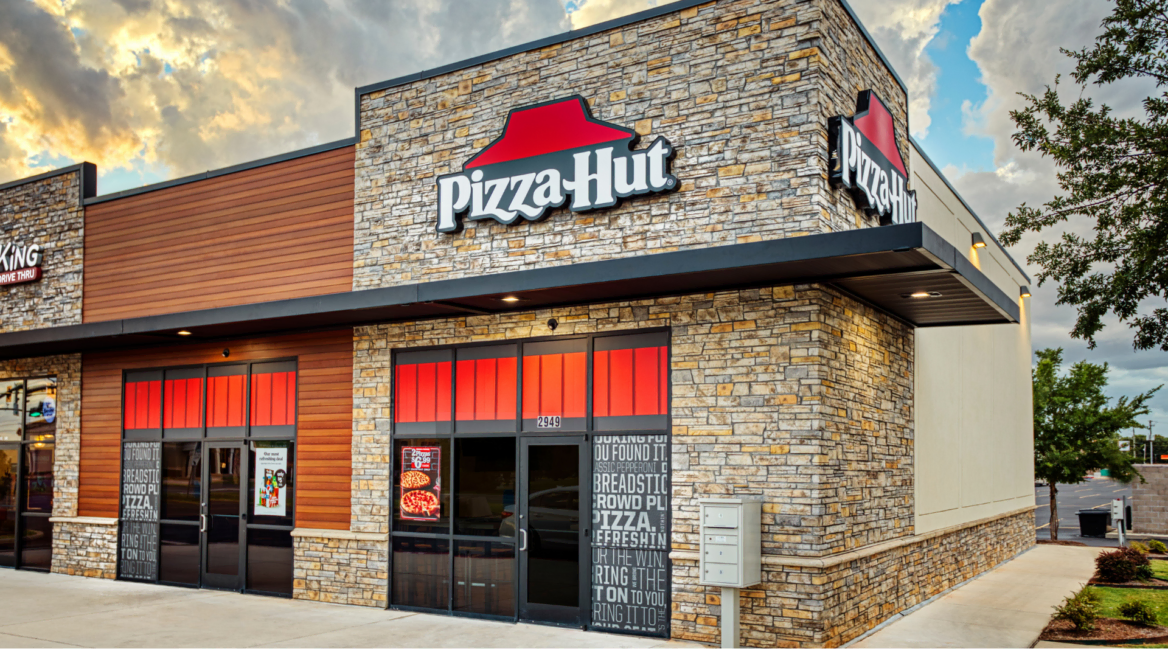

LongRange Capital officially closed its $1.5 billion acquisition of Pizza Hut on September 1, separating the fast food franchise from Yum Brands after more than two decades of shared ownership. Combined with Yum China’s $1.2 billion purchase of the brand’s Asia-Pacific operations, the total transaction value reached $2.7 billion. Yum Brands now operates exclusively under KFC, Taco Bell, and Habit Burger.
The deal marks the end of a long chapter for one of America’s most recognized fast-food names. Pizza Hut had been part of the Yum Brands portfolio since the company’s formation in 1997, alongside franchise concepts as KFC and Taco Bell. With the separation now complete, Yum Brands concentrates on a three-brand portfolio of more than 44,000 locations worldwide. At Pizza Hut, Aaron Powell stepped down as CEO effective at closing; Eduardo Luz, the brand’s former global chief brand officer, was named interim chief executive.


Pizza Hut
No One OutPizzas the Hut
- Restaurant
- Not disclosed
- Liquid capital: $Not disclosed
A $2.7 Billion Exit: How the Transaction Was Structured
The Pizza Hut sale involved two distinct buyers targeting different geographies. LongRange Capital, a private equity firm focused on consumer and restaurant brands, acquired the business covering all markets outside China for $1.5 billion. The Asia-Pacific footprint was handled separately: Yum China completed its own $1.2 billion acquisition of those operations on August 10, roughly three weeks before the LongRange closing. The two-part structure allowed each acquirer to operate within its respective regulatory and competitive environment. Together, the transactions transferred the Pizza Hut brand out of Yum Brands’ consolidated portfolio for a combined $2.7 billion.
A US Network Navigating Continued Contraction
Pizza Hut’s domestic business has been contracting for several years. The brand, which once operated more than 7,000 US locations, has seen its footprint shrink steadily as consumer preferences shifted away from the dine-in pizza model toward delivery platforms and fast-casual competitors. Approximately 250 US locations are projected to close in 2026, continuing a trend that accelerated through the early 2020s. The domestic network today operates predominantly through franchisees, meaning individual unit closures reflect franchisee-level decisions on lease renewals and unit economics rather than centralized directives. The transition to LongRange Capital arrives at a moment when the brand’s US profitability picture is actively being reshaped.
What Independence Means for Pizza Hut’s Next Chapter
Pizza Hut now enters its first extended period as a standalone business outside a publicly traded restaurant conglomerate. Interim CEO Eduardo Luz takes the helm of a global system that, outside China, spans markets across Europe, Latin America, and Asia alongside the United States. LongRange Capital has not publicly detailed an operational roadmap for the brand. Private equity-backed restaurant acquisitions at this scale have historically involved reviews of franchisee agreements, unit economics benchmarks, and brand positioning. Industry observers will look to the brand’s reported results in early 2027 for early indicators of the direction LongRange intends to take. No regulatory conditions remain outstanding following the September 1 close.
This content is provided for informational purposes only and does not constitute legal, tax, financial, or professional advice. Laws and regulations vary by state and individual circumstances and may change over time. Readers should consult a qualified attorney, tax professional, or other licensed professional regarding their specific situation. Nothing herein creates an attorney-client relationship.