


Pizza Hut
Financial Plan
Liquid capital
The amount you need to secure the necessary loans.
Total investment
Total Investment to launch the business, including initial fees ($25,000)
The Concept
Pizza Hut is an American quick-service pizza franchise founded in 1958 in Wichita, Kansas, by brothers Dan and Frank Carney. The brand is known for pizza, including its Original Stuffed Crust, as well as pasta, wings, sides and other menu items. Its restaurant network includes delivery, carryout and dine-in formats.
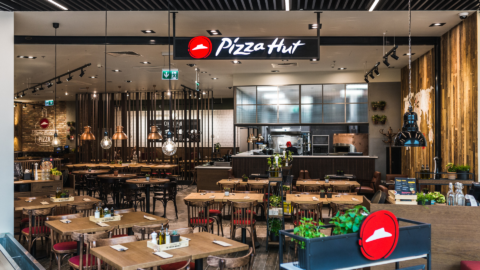
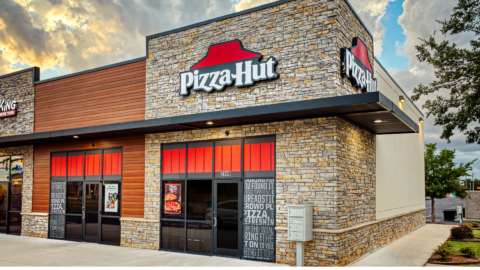
Pizza Hut operates through a highly franchised model and offers both Traditional and Non-Traditional opportunities. Traditional restaurants include Delivery/Carryout (Delco), Restaurant-Based Delivery and Fast Casual Delco formats. Non-Traditional concepts can operate in locations such as airports, universities, convenience stores, hotels, stadiums and travel centers.
The brand is particularly attractive to multi-unit operators. Pizza Hut highlights market planning, site selection, restaurant remodeling, training and operational support as part of its franchise offering. Its current franchise site reports that 99% of its restaurants are franchised.

Frequently Asked Questions
How much does it cost to open a Pizza Hut franchise?
The latest 2026 FDD estimates that opening a Traditional Pizza Hut requires approximately $670,000 to $2.13 million, depending on the restaurant format, location and development requirements.
The brand also offers Non-Traditional locations with significantly lower investment requirements. These can operate in places such as convenience stores, airports, hotels, universities and stadiums, making Pizza Hut accessible through several different formats.
What financial requirements does Pizza Hut have?
Prospective Traditional franchisees should have at least $350,000 in liquid assets and $700,000 in net worth. Pizza Hut also looks for candidates with entrepreneurial ability, people skills, business experience and the commitment to grow the business.
The brand is particularly interested in multi-unit operators, so candidates should consider the capital requirements of their broader development plan rather than looking only at the cost of one restaurant.
What are Pizza Hut's royalty and advertising fees?
Traditional Pizza Hut franchisees pay a 6% royalty on gross sales, or 6.5% in certain circumstances, plus 4.75% for national advertising.
At the standard rate, these represent 10.75% of gross sales before other expenses. Franchisees should also account for technology and digital fees when calculating their complete operating cost structure.
How much revenue does a Pizza Hut franchise generate?
The latest FDD provides a useful benchmark. In fiscal 2025, 4,767 mature franchised Traditional restaurants averaged $972,864 in annual gross sales, with a median of $929,232.
However, performance varies considerably by restaurant type. Dine-in/Red Roof/RBD locations averaged approximately $1.038 million, compared with approximately $937,342 for Delco restaurants. Gross sales should not be confused with profitability because franchisees still have to cover food, labor, rent, royalties, advertising and other expenses.
Is Pizza Hut suitable for first-time franchisees?
Pizza Hut does not position itself primarily as a beginner franchise. Its current franchise materials emphasize capability, commitment and capital, and the company has historically targeted operators with restaurant or business experience and ambitions to grow multiple locations.
The brand does, however, provide substantial support, including 8–12 weeks of initial training, site selection, market planning, remodeling support and operational resources.
You represent Pizza Hut?
Complete the missing information and review your details.
Latest News from PIZZA HUT
Pizza Hut’s New Owner Explores Bonds Backed by Franchise Fee Streams
Less than three weeks after completing its $2.7 billion acquisition of Pizza Hut from Yum! Brands, LongRange Capital is exploring a whole-business securitization: a financing structure that would bundle the brand's franchise fee and royalty streams into bonds sold to institutional investors, Bloomberg reported on September 18, 2026. The LongRange…
Pizza Hut Changes Hands: LongRange Capital Closes $1.5 Billion Acquisition
LongRange Capital officially closed its $1.5 billion acquisition of Pizza Hut on September 1, separating the fast food franchise from Yum Brands after more than two decades of shared ownership. Combined with Yum China’s $1.2 billion purchase of the brand’s Asia-Pacific operations, the total transaction value reached $2.7 billion. Yum…
