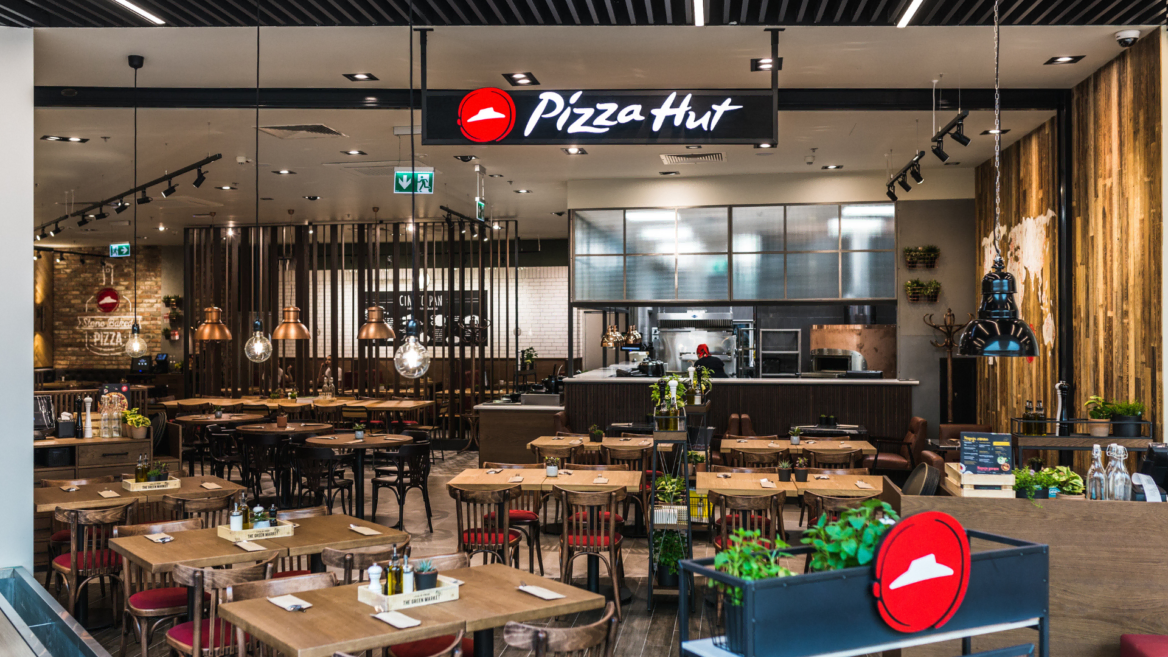

Less than three weeks after completing its $2.7 billion acquisition of Pizza Hut from Yum! Brands, LongRange Capital is exploring a whole-business securitization: a financing structure that would bundle the brand’s franchise fee and royalty streams into bonds sold to institutional investors, Bloomberg reported on September 18, 2026.
The LongRange Capital acquisition of franchise brand Pizza Hut closed in early September 2026, transferring ownership of one of the world’s largest pizza chains from Yum! Brands after a deal announced earlier this year. Pizza Hut operates approximately 18,000 restaurants globally, the vast majority under franchise agreements. Bloomberg cited people familiar with the matter but did not name an executive or confirm a timeline for the proposed securitization.


Pizza Hut
No One OutPizzas the Hut
- Restaurant
- Liquid capital: $
How Whole-Business Securitization Works for Franchise Brands
In a whole-business securitization, a company transfers substantially all of its assets, including franchise agreements, intellectual property, and fee-collection rights, to a special purpose entity. That entity then issues bonds repaid from ongoing franchise fee and royalty payments.
The structure appeals to institutional lenders because the revenue streams it packages are contractually obligated and, in well-established franchise systems, tend to be relatively predictable. For restaurant brands with large franchise networks, the model provides access to capital at rates that reflect the stability of royalty income rather than the operational volatility of individual restaurant locations.
A Financing Model Used Across Major Restaurant Chains
The approach reported for Pizza Hut has been employed by several major restaurant franchisors over the past decade. Domino’s Pizza raised more than $7 billion through whole-business securitizations between 2012 and 2021, using the structure to fund dividends and share buybacks. Subway completed a securitization of more than $3.5 billion in 2021, in part to support its own ownership transition.


Domino’s Pizza
You Got 30 Minutes
- Restaurant
- Liquid capital: $
Jersey Mike’s used a similar structure after Blackstone’s investment in 2023. For private equity buyers of franchise-heavy brands, the model can allow the acquirer to monetize the franchisor’s contractual income without requiring individual franchise operators to take on additional debt. Whether LongRange Capital moves forward with the structure and at what scale has not been publicly confirmed.
Jersey Mike’s
A Sub Above
- Restaurant
- Liquid capital: $500000
Price paid by LongRange Capital for Pizza Hut in the acquisition that closed in early September 2026, one of the largest restaurant brand transactions of the year. (Source: Bloomberg, 2026)

What the Deal Means for Pizza Hut’s Franchise Network
A securitization at the franchisor level typically operates at the holding company or intellectual property entity level, separate from the day-to-day operations of individual franchise locations. Royalty rates, brand fund contributions, and operational requirements are governed by each franchisee’s Franchise Disclosure Document and franchise agreement.
Yum! Brands, Pizza Hut’s prior parent, had spent several years working to simplify the brand’s unit economics and shift the network’s mix toward carry-out and delivery formats. LongRange Capital has not issued a public statement on the reported financing plans. Bloomberg’s report described the securitization as being in exploratory stages as of September 18, 2026.
This content is provided for informational purposes only and does not constitute legal, tax, financial, or professional advice. Laws and regulations vary by state and individual circumstances and may change over time. Readers should consult a qualified attorney, tax professional, or other licensed professional regarding their specific situation. Nothing herein creates an attorney-client relationship.