
Franchise costs in the United States vary from under $10,000 for a home-based unit at the lowest end to more than $5 million for a capital-intensive brick-and-mortar concept. There is no single published average, and the only citable figure for any given opportunity is that brand’s Franchise Disclosure Document (FDD). This guide explains what shapes the total cost, which fees recur, and how the FDD breaks the numbers down.
How much does a franchise cost is one of the first questions aspiring franchisees ask. Franchise costs vary by brand, industry, location, and business size. Beyond the initial franchise fee, expenses include real estate, equipment, inventory, training, and working capital. In the U.S., franchisors must disclose these costs in a Franchise Disclosure Document (FDD), which helps prospective franchisees assess the total investment.
How Much Does It Cost to Buy a Franchise in the US?
Investment ranges across franchise sectors span four orders of magnitude. At the lowest end, home-based service franchises start at roughly $4,720 to $73,520 for a Jan-Pro commercial cleaning unit (per the 2025 FDD) and $88,567 to $103,667 for a Fetch! Pet Care unit (per the 2025 FDD). Service-based franchises that operate from a vehicle or a small office, such as a franchised pet-care or home cleaning services, typically fall in the five-figure to low-six-figure range.


Stratus Clean
Green commercial cleaning
- Business Services
- 5500 Locations
- Liquid capital: $125000


KANU PET
Pet nutrition and care
- Pet Care
- 30 Locations
- Liquid capital: $200000
Retail and restaurant franchises generally require larger investments because of equipment, buildout, and real estate. A Jamba traditional store ranges from $468,650 to $806,250 (2025 FDD), and a Nékter Juice Bar from $246,578 to $640,838. Full-service and capital-intensive concepts move higher: an Anytime Fitness club runs from $397,537 to $973,142 (2024 FDD), and a Planet Fitness location from $1,525,000 to $5,221,500 (June 2025 FDD). A Primrose Schools early-education center ranges from $704,000 to over $8.5 million (Entrepreneur Franchise 500 directory). In every case, the total initial investment is distinct from the initial franchise fee alone.


Breadless
Bread-free fast-casual dining
- Restauration rapide (Fast-Food)
- 1 Location
- Liquid capital: $250000
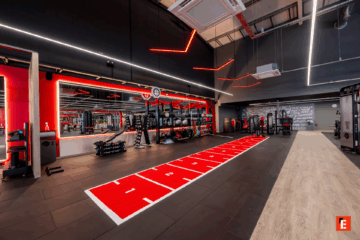

Snap Fitness
A franchise fit for the future
- Sports – Leisure
- 135 Locations
- Liquid capital: $250000
What Costs Are Included in the Initial Franchise Investment?
Item 7 of a franchise disclosure document breaks the total initial investment into standardized categories. The sections below describe the main cost areas a prospective franchisee typically budgets for.
Initial franchise fee
The initial franchise fee is the one-time upfront payment to the franchisor in exchange for the right to operate under the brand and its business system. Fees vary widely by concept: Robeks lists a franchise fee of $30,000, Jamba lists $35,500 (or $20,000 for qualifying veterans), and Primrose Schools lists $135,000, each per the respective brand’s current FDD. The fee may include initial training, access to operations manuals, and onboarding support, depending on the agreement.
Real estate and leasehold improvements
Location, rent, security deposits, buildout, renovations, and construction account for a significant share of total investment in most retail and food-service concepts. A home based franchise typically has little or no real estate line item, while a full service restaurant or fitness club franchise can require buildout costs in the hundreds of thousands. Item 7 of the FDD identifies real estate costs separately from the franchise fee.
Equipment, inventory, and supplies
Equipment needs are specific to the concept. If you want to start a juice bar you need commercial juicers, blenders, and refrigeration. To open a gym requires strength and cardio equipment. Opening a daycare requires classroom furniture and outdoor play structures. Initial inventory, point-of-sale technology, interior and exterior signage, uniforms, and starter supplies also fall into this category. The FDD typically shows a range reflecting prototype variation.
Training, insurance, licenses, and professional fees
Training-related expenses typically cover travel to the franchisor’s training center, lodging, and salaries during the training period. Business registration, local permits, state licensing, general liability and workers’ compensation insurance, legal review of the franchise agreement, and accounting setup are commonly separate line items in Item 7.
Working capital
Working capital refers to the cash reserved for operating expenses during the first months of operation, before revenue reaches a sustainable level. Payroll, rent, utilities, marketing, inventory replenishment, and loan payments all fall under this category. Item 7 of most FDDs includes a working capital estimate, often covering three to six months of operating expenses. The SBA frequently references three to six months of expenses as a planning benchmark in its small business guidance.
Good to know
Under the FTC Franchise Rule (16 CFR Part 436), the franchisor must deliver the FDD to a prospective franchisee at least 14 calendar days before the franchisee signs any binding agreement or pays any money to the franchisor. This is a pre-sale disclosure period, not a right to cancel after signing. States such as California, Illinois, Maryland, Minnesota, New York, and Washington also maintain their own registration and disclosure requirements.
What Ongoing Fees Do Franchisees Pay?
Running a franchise business after opening involves several categories of recurring fees in addition to normal business operating costs. These ongoing fees are disclosed in Item 6 of the FDD. Common categories include:
- Royalty fees: calculated as a percentage of gross sales (commonly between 4% and 10%) or as a fixed monthly amount. Anytime Fitness charges a flat $799 per month per unit (per the 2024 FDD). Jamba charges 6% of gross sales (per the 2025 FDD). Planet Fitness charges 7% of monthly dues (per the FY2024 10-K).
- Marketing or advertising fund contributions: often 1% to 4% of gross sales, directed to a national or regional marketing fund.
- Technology, software, and system fees: cover POS systems, scheduling platforms, and brand software.
- Renewal fees: paid at the end of the initial franchise term if the franchisee elects to renew.
- Rent, payroll, insurance, inventory, and utilities: ordinary operating costs that any business bears, separate from franchisor fees.
Because royalties are typically calculated on gross sales rather than net profit, a franchisee may owe royalties even when the unit is not profitable in a given period. Each franchise system structures its fees differently, so the exact formula and timing are set out in Item 6 of that brand’s FDD.
What Financial Requirements Do You Need to Meet?
Franchisors commonly publish minimum financial thresholds for candidates. Four related concepts frequently appear:
- Liquid capital: cash or near-cash funds the candidate can readily deploy. Jan-Pro has no minimum liquid-capital requirement for its lowest-cost unit tier; Primrose Schools and large fitness concepts commonly require $500,000 or more in liquid capital, per their respective FDDs.
- Net worth: the value of the candidate’s assets minus liabilities. Anytime Fitness lists a minimum net worth of $380,000 (per the brand’s franchise development page). Snap Fitness lists $1 million for a single license.
- Total initial investment: the estimated cost of establishing the franchise (Item 7).
- Working capital: cash reserved for ongoing business expenses after opening.
Multi-unit development agreements commonly carry higher thresholds than single-unit purchases. Meeting a brand’s minimum requirements qualifies a candidate to proceed through the discovery process; it does not guarantee approval, profitability, or financing eligibility.
How Can You Find Out the True Cost of a Franchise?
The Franchise Disclosure Document is the authoritative source for the financial details of any US franchise opportunity. Four FDD items are directly relevant to cost analysis:
- Item 5: Initial fees paid to the franchisor at signing (the initial franchise fee and any related initial payments).
- Item 6: Other fees charged by the franchisor on an ongoing or occasional basis, including royalties, marketing fund contributions, renewal fees, and transfer fees.
- Item 7: Estimated initial investment, with a line-item range covering franchise fee, real estate, equipment, inventory, training expenses, insurance, and working capital.
- Item 19: Financial performance representations, when the franchisor chooses to disclose historical sales, revenue, or profit data for existing units. Item 19 is optional under the FTC Franchise Rule, so not every franchisor includes it.
Item 7 is the primary source for estimating startup expenses, and Item 19 (where provided) is the primary source for historical unit-level financial performance. State franchise registration portals, including California DFPI, Wisconsin DFI, Minnesota Commerce, and Washington DFI, publish current FDDs for brands that register in those states. Reviewing a current FDD, speaking with existing franchisees listed in Item 20, and consulting a qualified franchise attorney or financial professional are standard elements of the pre-signing due-diligence process.
This content is provided for informational purposes only and does not constitute legal, tax, financial, or professional advice. Laws and regulations vary by state and individual circumstances and may change over time. Readers should consult a qualified attorney, tax professional, or other licensed professional regarding their specific situation. Nothing herein creates an attorney-client relationship.