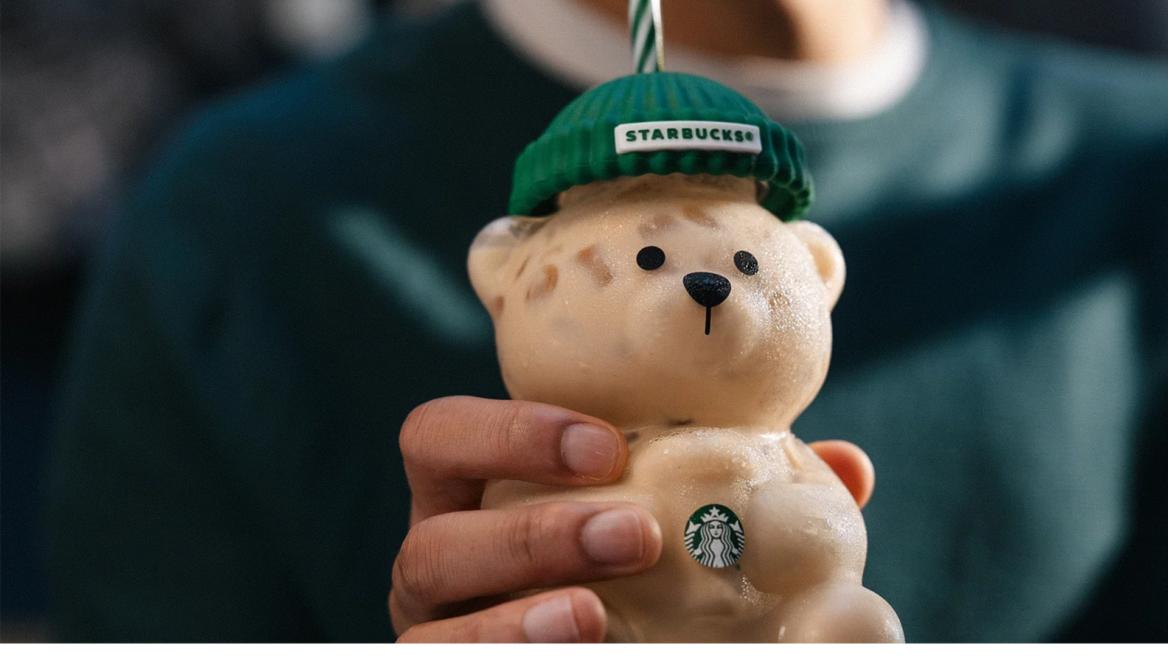

A $29.95 glass cold cup shaped like a teddy bear sold out nationwide in hours on November 6, 2025, generating $74.7 million in a single day and $64 million in incremental revenue over two weeks. The Starbucks Bearista has since become a documented case study in what a collectible merchandise drop can do to restaurant traffic, and what it signals for multi-unit operators across the franchise industry, even though Starbucks itself does not franchise in the US.
Transaction data compiled by Facteus across more than 20,000 Starbucks locations showed launch day total spend of $74.7 million, up 58.2% from the prior day. The two-week window generated 5 million additional transactions compared to the same period in 2024, a year-over-year increase of 11.5%, with the first week alone contributing $53 million in additional spend.
Some locations received as few as one or two units of the 20-ounce cup; resale prices on eBay reached $1,400. Three months after the launch, Starbucks reported U.S. comparable transaction growth for the first time in eight quarters. On the investor call, CEO Brian Niccol described the Bearista as a “Lucky Strike extra.”
When Scarcity Is Not a Strategy but a Consequence
What made the Bearista phenomenon distinctive was that the shortage was not manufactured. Starbucks had shipped more units than almost any other holiday merchandise that season; the mismatch between supply and demand was a miscalculation, not a tactic. Its in-store-only format created a physical urgency that digital sales could not replicate: customers saw empty shelves firsthand and watched lines form outside.
Many filmed the moment and shared it online. Studies on perceived scarcity have found it can increase product desirability by up to 200%. The Bearista activated that effect without engineering it, generating earned media well beyond Starbucks’ own marketing budget.
What the Numbers Show for Franchise Operators
The Bearista data documents merchandise as a primary traffic driver rather than a secondary branded item. The two-week period averaged 16.3% higher daily transactions than the prior week and maintained 16.7% growth year-over-year, sustained elevation rather than a single-day spike.
For franchise systems, the mechanics carry specific relevance: merchandise drops tied to in-store-only availability create a destination motive that price promotions and limited-time beverages rarely generate with the same intensity. When a product holds genuine collectible appeal, it can function as a traffic engine rather than a revenue afterthought.
Starbucks Moves From Accident to Architecture in 2026
What began as an unexpected holiday surplus became the foundation of a redesigned merchandise program. In July 2026, Starbucks released the Pink Bearista Glass Cold Cup at $32.95 with a two-per-customer purchase limit; it mostly sold out by 7 a.m. across North America on the day it went on sale. The company has since launched collaborations with Peanuts, Hello Kitty, Miffy, and Roller Rabbit, and introduced Starbucks Shop, an online destination for exclusive products initially available to Rewards members.
For the 2026 holiday season, Bearista cups are returning with a rare Golden Bear find-and-win element. Tressie Lieberman, Global Chief Brand Officer, described the original Bearista as “an inflection point,” marking a shift in how the company approaches the relationship between product desirability and cultural commerce.
This content is provided for informational purposes only and does not constitute legal, tax, financial, or professional advice. Laws and regulations vary by state and individual circumstances and may change over time. Readers should consult a qualified attorney, tax professional, or other licensed professional regarding their specific situation. Nothing herein creates an attorney-client relationship.