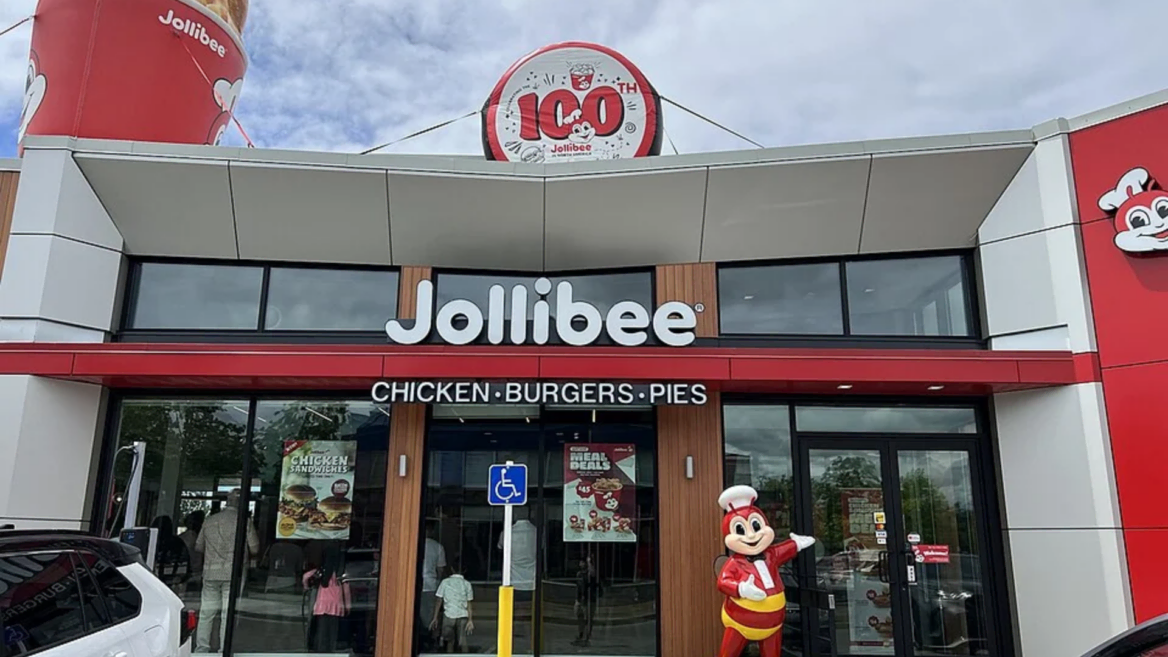

A growing number of experienced US restaurant operators are adding Jollibee to their franchise portfolios, according to a report published by 1851 Franchise in November 2026. These operators, many with decades of experience in systems such as Fuddruckers and Dave’s Hot Chicken, cite unit-level economics, whitespace in the chicken category and brand differentiation as the factors driving their decisions.
Jollibee, operated by Jollibee Foods Corporation, has expanded its US presence across major markets including California, New York and Illinois. Jollibee, operated by Jollibee Foods Corporation, has expanded its US presence across major markets including California, New York and Illinois.
The 1851 Franchise report features the perspective of Peter Wright, vice president of franchising for Jollibee Group North America, alongside the account of George Almeida, a veteran QSR operator who recently signed a development agreement for 15 locations in Northern California.


Jollibee
Bida ang saya – It’s the joy that wins
- Restaurant
- Liquid capital: $
Three Factors Operators Name When Choosing Jollibee
Wright identifies three reasons that consistently emerge when experienced operators explain their decision to invest in Jollibee. The first is the food: Wright says prospective franchisees name taste as their primary driver. The second is category growth: the US chicken segment is one of the fastest-expanding in quick service, and Jollibee competes within it while offering a menu profile distinct from Chick-fil-A, Popeyes and other dominant players.
The third factor is territory. “An important decision-making factor is the whitespace opportunity. There is certainly no shortage of popular chicken-focused QSR concepts. That being said, most of the existing brands don’t have the kind of development opportunity in terms of untapped markets that we have,” explains Peter Wright, Vice President of Franchising, Jollibee Group North America.
One Operator’s Account: 15 Units in Northern California
George Almeida spent nearly 40 years in the Fuddruckers system before later operating Dave’s Hot Chicken restaurants in Northern California. When evaluating his next franchise commitment, Almeida started with the financial metrics. The brand’s 2026 Franchise Disclosure Document reported average annual gross sales of approximately $4.91 million for free-standing locations and $5.07 million for in-line restaurants, based on 77 locations open for the full 2025 calendar year.
Almeida signed a 15-unit development agreement for Northern California, citing both the economic profile and the brand’s standing in a region with one of the country’s largest Filipino-American communities.
Good to Know
The AUV figures cited above come from the 2026 Jollibee Franchise Disclosure Document, Item 19, and are based on 37 free-standing and 40 in-line reporting locations open for the full 2025 calendar year. Free-standing annual gross sales ranged from $2,053,972 to $9,820,614; in-line ranged from $2,205,139 to $9,407,510. Individual results vary. Prospective franchisees are encouraged to review the complete FDD and consult qualified advisors.
What the Trend Signals for the US Franchise Market
The movement of experienced operators from established systems toward Jollibee reflects a pattern seen more broadly in US franchising. As mature QSR systems reach saturation in key markets, multi-unit operators with existing capital, teams and real estate relationships look for concepts where development whitespace translates into durable unit economics.
For Jollibee, the strategy of awarding development rights only to operators committed to 10 or more locations concentrates growth in the hands of experienced builders rather than spreading agreements across a larger, less-experienced base. The brand is working toward a long-term goal of 500 North American restaurants through a deliberately selective franchisee qualification process.
This content is provided for informational purposes only and does not constitute legal, tax, financial, or professional advice. Laws and regulations vary by state and individual circumstances and may change over time. Readers should consult a qualified attorney, tax professional, or other licensed professional regarding their specific situation. Nothing herein creates an attorney-client relationship.