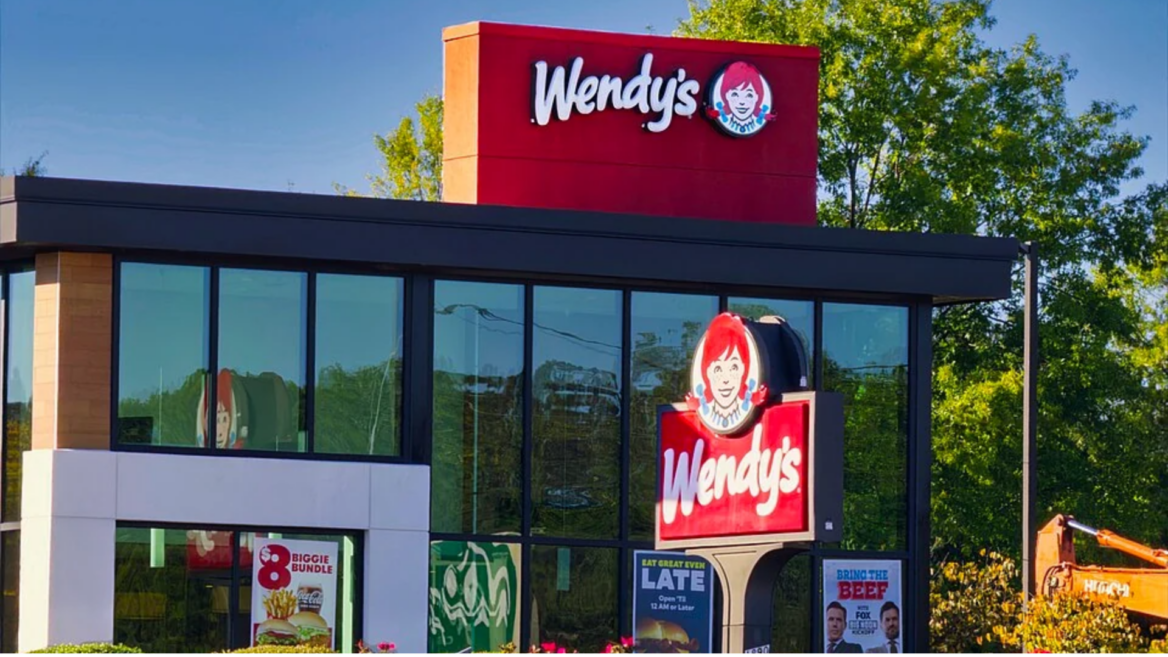

A proposed class action filed in Maryland federal court accuses Wendy’s Co. and its point-of-sale software provider NCR Voyix Corp. of coordinating menu prices across independently owned franchise locations, in alleged violation of federal antitrust law. The complaint, filed November 23, 2026, mirrors a similar case recently brought against McDonald’s.
The restaurant franchise sector has faced increasing antitrust scrutiny in 2026. A class action against McDonald’s filed earlier this year alleged that corporate had used AI-based tools to coordinate pricing across its franchise system. The Wendy’s complaint arrives weeks later, drawing on a similar legal theory and naming a point-of-sale technology vendor as a co-defendant.
At the center of both cases is a structural question specific to franchising: how much pricing authority a corporate brand can exercise over locations owned by independent operators before that authority constitutes horizontal price-fixing under federal competition law.
A Proposed Class Action Filed in Maryland Federal Court
The plaintiff, Andy Garcia, a California resident who describes eating at Wendy’s at least once a week, filed the complaint on November 23, 2026, in the US District Court for the District of Maryland. NCR Voyix Corp., a provider of restaurant point-of-sale systems, is named alongside Wendy’s Co. as a co-defendant. The proposed class covers all US consumers who purchased menu items at a Wendy’s location since January 1, 2022, whether the restaurant was operated by a corporate entity or an independent franchisee.
The complaint seeks treble damages and a court order halting the alleged pricing scheme. Wendy’s and NCR Voyix had not responded to press requests for comment as of November 25. Garcia is represented by Yagman PLLC; the matter is docketed under No. 8:26-cv-04886 in the US District Court for the District of Maryland.
defendants are named in the complaint: Wendy’s Co. and NCR Voyix Corp., its point-of-sale software provider. Both are accused of participating in the alleged price-coordination scheme across the Wendy’s franchise network.

POS Technology at the Center of the Antitrust Theory
The complaint alleges that Wendy’s used NCR Voyix’s point-of-sale system to collect confidential sales data from independently owned franchise locations and apply that data to set menu prices centrally across the network. Under this theory, individual franchise operators lost the ability to compete on price with other Wendy’s locations in their market.
The filing cites Wendy’s 2024 announcement of system-wide dynamic pricing as evidence that pricing decisions are made at the corporate level rather than by individual operators. The 2026 rollout of chain-wide price cuts is cited on the same basis, along with Wendy’s internal reference to its franchise system as “One Wendy’s.”
Good to know
Under US antitrust law, horizontal price-fixing refers to coordination on pricing among parties that are legally independent competitors. A franchise system creates a specific analytical challenge: franchise locations are owned by independent operators, but their franchise agreements with the corporate brand can include varying levels of pricing guidance. When that guidance is alleged to operate through shared data systems, courts typically examine whether the technological mechanism displaced the independent competitive decision-making that antitrust law assumes between separate businesses.
A Pattern of Litigation Emerging Around Franchise Pricing Technology
The Wendy’s complaint is the second high-profile class action in the restaurant franchise sector in 2026 to focus on technology-mediated pricing coordination. The earlier AI pricing case against McDonald’s alleged the use of AI pricing tools to influence menu prices across franchise locations.
Bloomberg Law reporting on the Wendy’s filing notes that antitrust legal experts expect additional lawsuits targeting companies that use AI or automated tools for franchise-related pricing decisions. The emergence of dynamic pricing systems across the quick-service sector has introduced shared data infrastructure between franchisors and independently owned operators at a scale that did not previously exist.
What to Watch as Proceedings Begin
The complaint remains in its early stages as of November 25, 2026. Neither Wendy’s nor NCR Voyix had filed responses as of the time of publication. A federal class action must be certified by the court before it proceeds in that form, a step that follows an initial briefing period. As the case moves through its initial procedural phases, public court filings will become available on the Maryland federal docket. The case number is 8:26-cv-04886.
This content is provided for informational purposes only and does not constitute legal, tax, financial, or professional advice. Laws and regulations vary by state and individual circumstances and may change over time. Readers should consult a qualified attorney, tax professional, or other licensed professional regarding their specific situation. Nothing herein creates an attorney-client relationship.