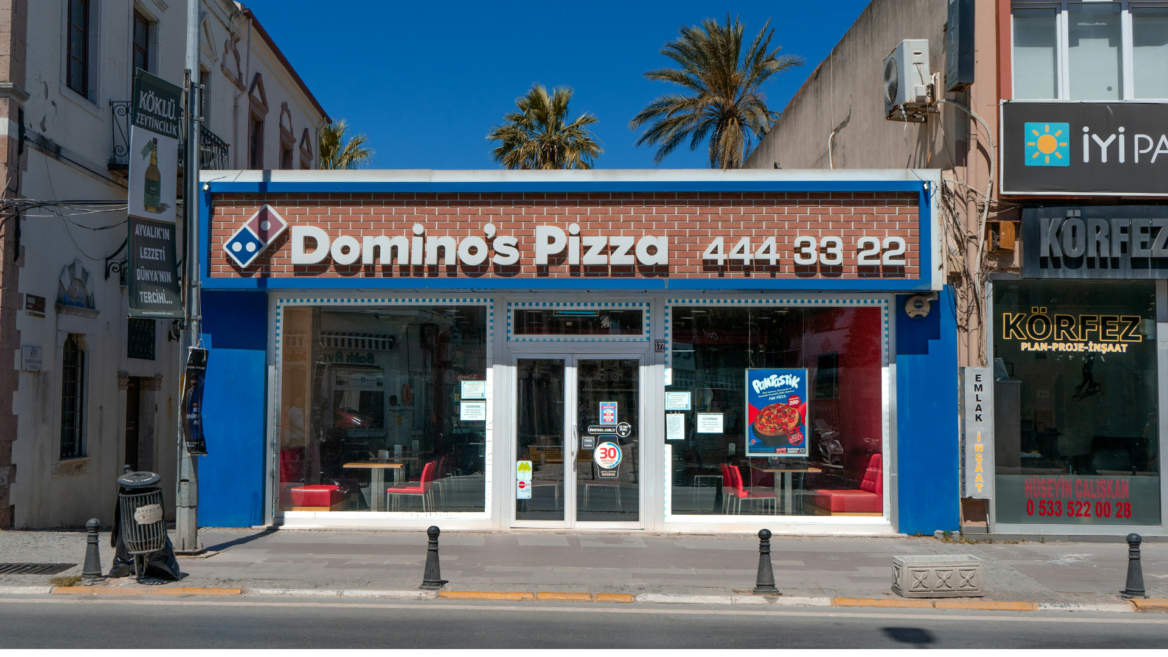

A Domino’s Pizza franchisee operating 13 restaurants in Northern Ohio abruptly closed all of them, with no bankruptcy filing on record. Mile High Pizza Company LLC, operated by franchisee Anthony Satterwhite, shuttered the locations without public explanation. Domino’s Pizza Inc. confirmed the closures and stated it is actively working to transition the stores to new operators.
The pizza franchise segment has recorded a series of operator distress events over the past 18 months. Pizza Hut‘s parent Yum Brands announced the closure of 250 underperforming locations in the first half of 2026. Papa John’s committed to closing 200 additional units by year-end. Against that backdrop, individual franchisee exits have become a recurring feature of sector restructuring, with pressure concentrated among mid-size operators carrying high unit counts and compressed margins in a period of elevated labor and food costs.


Domino’s Pizza
You Got 30 Minutes
- Restaurant
- Liquid capital: $

Pizza Hut
No One OutPizzas the Hut
- Restaurant
- Liquid capital: $
Mile High Pizza Company Closes 13 Domino’s Locations in Northern Ohio
Anthony Satterwhite, operating under the entity Mile High Pizza Company LLC, closed 13 Domino’s franchise locations in Northern Ohio without prior public notice. Fast Company identified 11 of the affected addresses, spanning communities including Akron, Ashland, Barberton, Canal Fulton, Crestline, Galion, Mansfield and Wadsworth. The franchisee did not issue a statement or file for bankruptcy protection as of the time of reporting. Satterwhite first entered the Domino’s franchise system in 2017, purchasing four locations in the Mansfield, Ohio area. At peak, he held at least 25 franchise units, according to Domino’s April 2026 franchise disclosure document.
Domino’s Confirms the Closures and Pursues Transition to New Franchisees
Domino’s Pizza Inc. confirmed the 13 closures and characterized the situation as specific to this franchisee rather than a broader reflection of brand performance. The company said it was working to reopen the affected locations under new ownership.
Domino’s operates more than 22,300 locations across more than 90 countries worldwide, according to the company’s website. Fast Company, which reported on the closures in detail, noted that Domino’s did not provide a complete list of the affected addresses, with only 11 of the 13 locations publicly identified.
A Broader Pattern of Franchisee Distress in the Pizza Segment
The Mile High Pizza Company closures follow a series of similar events in the Domino’s system and across the pizza category. Domino’s Pizza Enterprises, the brand’s largest global franchisee, closed 205 low-performing locations in 2025. North County Pizza Inc., a Domino’s operator based in Oceanside, California, filed for Chapter 11 bankruptcy on March 11, 2025.
The category-wide pressure reflects a period in which food delivery competition, rising input costs and changing consumer habits have affected the economics of franchise pizza operations. The pattern is not limited to Domino’s: Chuck E. Cheese parent CEC Entertainment has also closed multiple locations in 2026 as leases have expired without renewal.
Frequently Asked Questions
When a Domino’s franchisee closes a location, the parent company Domino’s Pizza Inc. typically works to transfer the restaurants to a new franchisee operator. The brand retains the rights to the territory and the systems, and locations can be reopened under a different operator. Domino’s confirmed this approach following the Mile High Pizza Company closures, stating it was actively working to bring the stores under new ownership.
No. A franchisee operates independently under a license from the franchisor. When a franchisee closes locations, it reflects that individual operator’s financial situation and does not necessarily indicate a problem with the broader brand. Domino’s characterized the Mile High Pizza Company closures as “an isolated franchisee matter,” noting they did not reflect the overall performance of its network of more than 22,300 locations worldwide.
This content is provided for informational purposes only and does not constitute legal, tax, financial, or professional advice. Laws and regulations vary by state and individual circumstances and may change over time. Readers should consult a qualified attorney, tax professional, or other licensed professional regarding their specific situation. Nothing herein creates an attorney-client relationship.