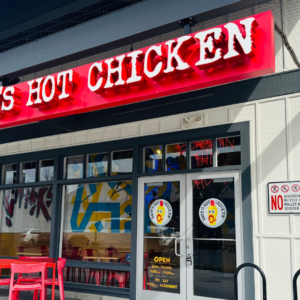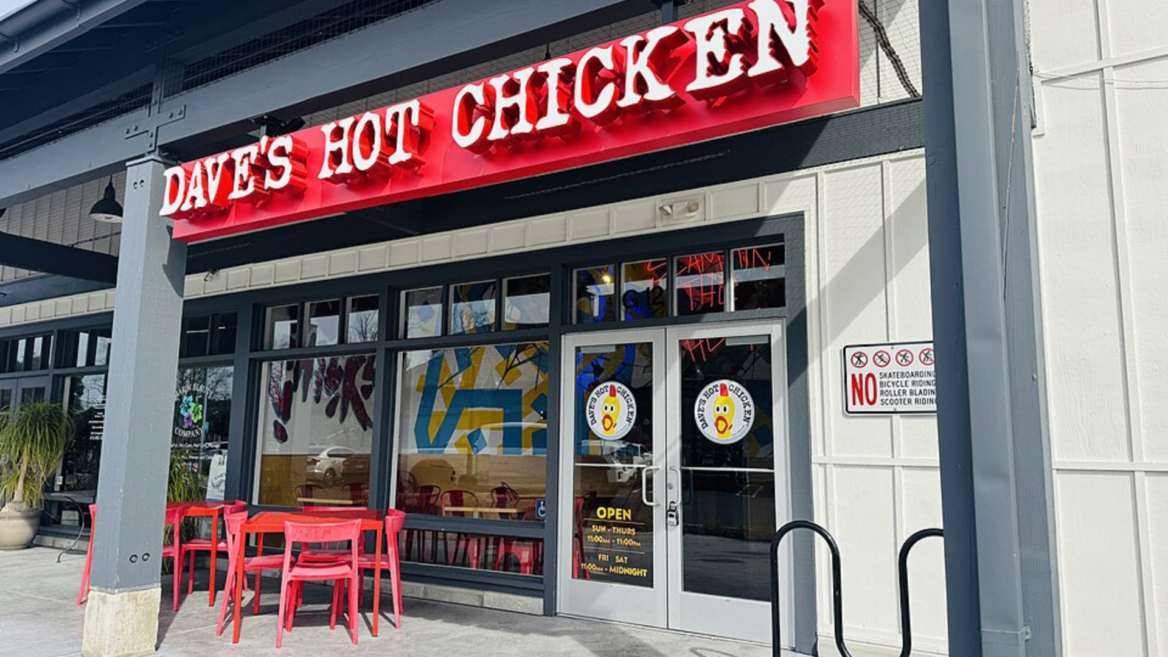

One of the Dave’s Hot Chicken franchise system’s multi-brand operators filed for Chapter 11 bankruptcy protection in Pennsylvania on September 21, 2026, weeks after its bank sued for an alleged $20 million loan default. In the same court filing, the operator launched a countersuit accusing the lender of manufacturing a default to block a $30 million sale of its restaurants.
The Integritty Group (TIG), led by principals Raj Mahadevia, Jiger Patel, and Pranav Desai, operates several franchise brands including Qdoba, Checkers, and The Greene Turtle Sports Bar and Grille, in addition to seven Dave’s Hot Chicken locations across New Jersey, Pennsylvania, and Delaware.
The Chapter 11 petition covers only TIG’s Dave’s Hot Chicken entities, organized under TIG Reaper LLC and three affiliated groups. Three additional Dave’s stores are listed as being in late-stage development. The group’s Qdoba, Checkers, and Greene Turtle operations are not included in the filing.

Dave’s Hot Chicken
Damn, That’s Good
- Restaurant
- Not disclosed
- Liquid capital: $Not disclosed
A $20 Million Loan, a Disputed Default, and a Court-Appointed Receiver
Bank Midwest, a division of NBH Bank, extended two loans to TIG Reaper in August 2024: one for $1.65 million and a second for $8.35 million. The bank sued TIG’s Qdoba affiliates in August 2026, alleging the group had failed to meet its debt repayment requirements on a $20 million loan. Both parties subsequently agreed to the appointment of a neutral receiver to manage TIG’s Qdoba assets during the dispute.
TIG’s largest single listed debt in the bankruptcy filing stands at approximately $8.75 million, owed to Bank Midwest. The filing, submitted to the United States Bankruptcy Court for the Eastern District of Pennsylvania, lists between 100 and 199 creditors, with total assets and total liabilities each in the $10 million to $50 million range.
TIG Countersues the Bank, Alleging Interference With a $30 Million Sale
Filed simultaneously with the Chapter 11 petition, TIG’s lawsuit against Bank Midwest alleges that the bank interfered with an active sale process in which a prospective buyer had offered approximately $30 million for its Dave’s Hot Chicken operations. According to the complaint, the bank declared a default before the transaction could close, which TIG says “undermined the market” for its restaurants and caused the potential buyer to cut its offer roughly in half.
IG further alleges that Bank Midwest required the group to funnel any sale proceeds through a forbearance agreement, effectively blocking an orderly transaction. The complaint describes the bank’s conduct as acting “in bad faith” by exploiting ambiguities in its own loan documents to apply pressure beyond its legitimate contractual rights.
Merchant Cash Advances Add Another Layer to TIG’s Debt Picture
Beyond its bank obligations, TIG also carried $305,000 in merchant cash advances from three separate lenders at the time of filing. Merchant cash advances are a form of revenue-based financing in which a business receives an upfront payment in exchange for a portion of future sales, rather than a fixed interest rate.
The bankruptcy filing notes that multiple MCAs can create what practitioners describe as a “liquidity crunch”, particularly for restaurant operators facing declining traffic or compressed margins. TIG’s Qdoba affiliates, which remain outside the bankruptcy proceedings, were already under receivership at the time the Dave’s Hot Chicken entities filed for Chapter 11.
Dave’s Hot Chicken Restaurants Remain Open; the Franchisor Is Not Involved
Dave’s Hot Chicken, the franchisor itself, is not a party to the TIG Reaper bankruptcy. The brand, which originated as a pop-up in a Los Angeles parking lot in 2017, has grown into one of the more active fast-casual chains in the country. TIG’s seven operating Dave’s stores remain open during the proceedings.
The parallel lawsuit against Bank Midwest and the Chapter 11 process will run concurrently in federal court. A resolution, whether through a sale, a restructuring plan, or litigation outcome, will shape what happens to TIG’s nine Dave’s Hot Chicken locations, including the three still in development.
This content is provided for informational purposes only and does not constitute legal, tax, financial, or professional advice. Laws and regulations vary by state and individual circumstances and may change over time. Readers should consult a qualified attorney, tax professional, or other licensed professional regarding their specific situation. Nothing herein creates an attorney-client relationship.