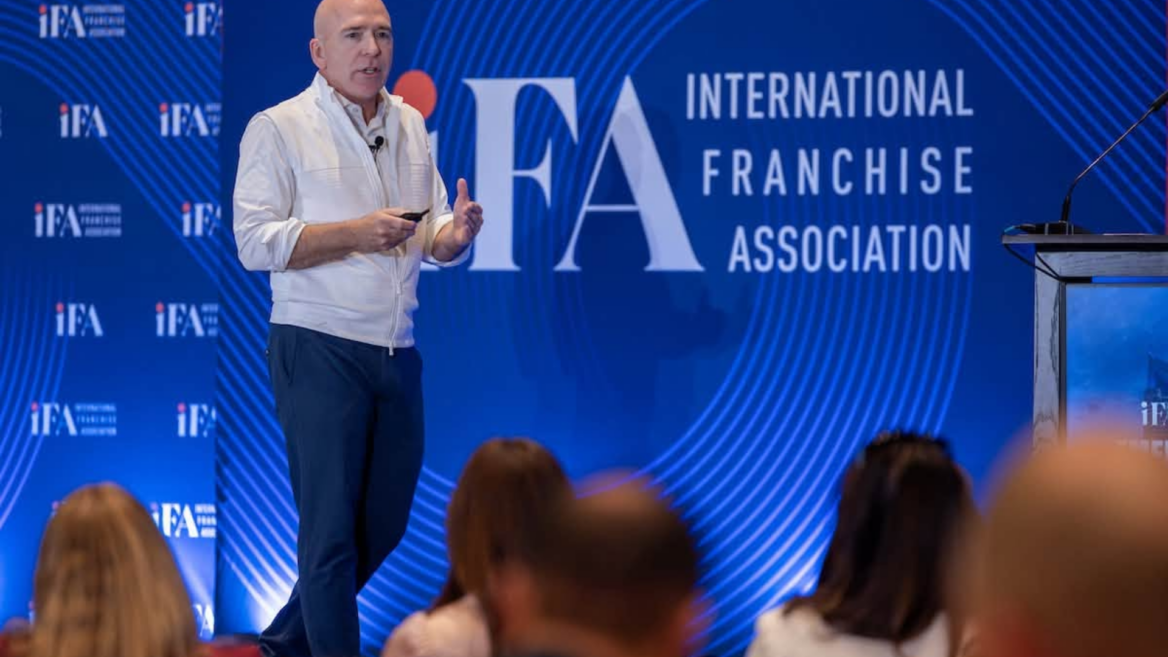

The 2026 IFA Advocacy Summit opened September 14 in Washington, D.C., bringing more than 400 franchise industry leaders to Capitol Hill at a pivotal moment for federal legislation. The central agenda: the American Franchise Act, a bipartisan bill with 142 House co-sponsors and a companion Senate measure that would lock in a federal standard for joint employer determinations after a decade of shifting rules.
The International Franchise Association holds its annual Advocacy Summit each fall, bringing franchisors, franchisees, franchise companies and industry suppliers together for two days of congressional meetings and policy briefings. The 2026 edition, running through September 16 at Union Station in Washington, D.C., arrives at what the IFA describes as one of the most consequential moments in the industry’s legislative history.
The joint employer standard, which determines when a franchisor can be held legally responsible for the employment practices of its franchisees, has been revised four times over the past decade under changing administrations, creating persistent uncertainty for operators across the franchise system.
What the American Franchise Act Would Change
The American Franchise Act (H.R. 5267) would establish in federal statute that a franchisor must exercise direct and immediate control over narrowly defined essential terms of employment to be considered a joint employer alongside a franchisee. Under the current patchwork of National Labor Relations Board rulings and state-level interpretations, the threshold for joint employer status has shifted significantly across administrations, at times leaving franchisors exposed to liability for employment decisions made independently by their franchisees.
Codifying a uniform federal standard is the primary objective the IFA has placed before Congress, arguing that regulatory uncertainty discourages investment and undermines the structural independence that defines the franchise relationship. The bill cleared committee in the House earlier in 2026, positioning it for a potential floor vote during the current legislative session.
142 House Co-Sponsors and a Senate Companion Bill
H.R. 5267 has attracted 142 bipartisan co-sponsors in the House as of the September summit, a figure the IFA has cited as evidence of broad legislative appetite across party lines. A companion measure has also been introduced in the Senate, giving the bill a pathway through both chambers for the first time.
The IFA’s government relations team coordinated a multistate lobbying effort in the lead-up to the summit, with franchisees and franchisors traveling to their home districts before converging on Capitol Hill. The House co-sponsor count represents a significant increase from prior sessions, when similar joint employer bills struggled to gain traction in either chamber.
Franchise Leaders Present Economic Data on Capitol Hill
Summit programming is organized around direct congressional meetings, with attendees scheduled to visit the offices of their respective home-state representatives and senators. Franchise operators bring economic impact data, including employment figures, unit counts, and tax contributions by congressional district, a format the IFA has used in prior years to translate national industry statistics into locally relevant arguments for individual legislators.
Former House Speaker Kevin McCarthy is among the featured speakers at Union Station alongside members of Congress from both parties. Attendees include multi-unit operators, emerging brand founders, and franchise industry suppliers who have individually signed on in support of the American Franchise Act and are making their first visits to Capitol Hill as franchise advocates.
What the Industry Is Watching for After the Summit
Whether the American Franchise Act advances to a full House vote and earns Senate consideration will depend in part on the legislative momentum generated during and after the September summit. The IFA has indicated it intends to maintain pressure through the end of the current congressional session, with direct outreach to Senate offices identified as the next phase of its advocacy strategy.
The bill’s trajectory is being closely watched by franchise attorneys, multi-unit operators, and prospective franchisees alike, since the joint employer standard has direct implications for how franchise agreements are structured, what support franchisors can legally provide, and what liability exposure operators may face in states with their own evolving employment statutes.
This content is provided for informational purposes only and does not constitute legal, tax, financial, or professional advice. Laws and regulations vary by state and individual circumstances and may change over time. Readers should consult a qualified attorney, tax professional, or other licensed professional regarding their specific situation. Nothing herein creates an attorney-client relationship.