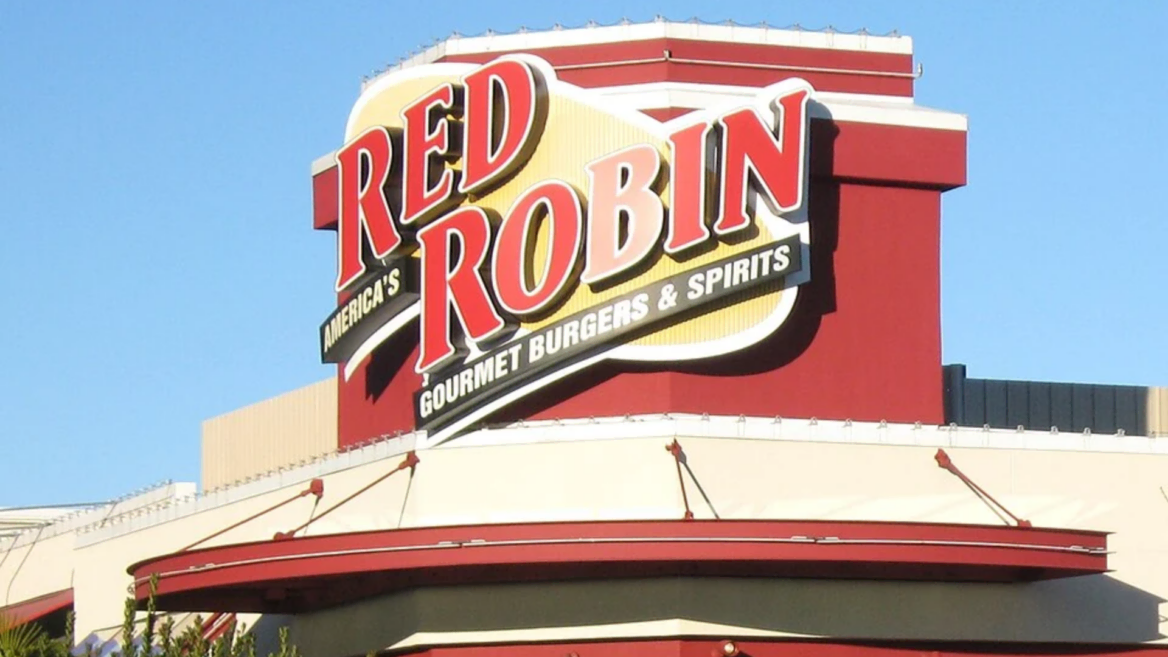

Red Robin Gourmet Burgers has announced a major portfolio restructuring: 108 company-owned restaurants sold to three franchise operators for a combined $89.4 million, alongside preliminary Q3 results showing comparable restaurant revenue up +3.9%. The transactions, disclosed November 3, 2026, also include a $115 million debt refinancing and an earnings call rescheduled to November 18.
Founded in 1969 and headquartered in Greenwood Village, Colorado, franchise brand Red Robin Gourmet Burgers operates approximately 500 locations across the United States and Canada, primarily under a full-service casual dining format centered on gourmet burgers. Over the past several years, the company has pursued an asset-light strategy, progressively reducing its directly owned restaurant count in favor of a larger franchised footprint.


Red Robin Gourmet Burgers
Red Robin. YUM!
- Restaurant
- Liquid capital: $
108 Restaurants Sold to Three Operators for a Combined $89.4 Million
The refranchising covers 108 former company-owned units transferred to three separate franchise operators. The combined transaction value reached $89.4 million. The deals represent one of the more significant single-tranche refranchising programs in the casual dining sector in recent memory, shifting a large portion of Red Robin’s portfolio to independent operators who assume local operational responsibility under the brand’s franchise agreement. The company did not disclose the names of the three acquiring operators in the preliminary announcement.
Preliminary Q3 Results: Comparable Revenue Up 3.9% and $115 Million Debt Refinancing
Alongside the refranchising disclosure, Red Robin released unaudited preliminary results for its fiscal third quarter ended October 4, 2026. Comparable restaurant revenue rose +3.9% year over year, a figure that suggests in-restaurant traffic and average check sizes held steady during the period. Full financial results, including earnings per share and cost breakdowns, are scheduled for November 18, 2026, when the company hosts its rescheduled investor call. The company also completed a $115 million debt refinancing in conjunction with the refranchising program.
Good to know
Debt restructuring in connection with an asset sale is a common mechanism in franchise portfolio transitions. It allows the franchisor to redirect capital from operations toward brand development and franchisee support programs rather than carrying the debt on a shrinking company-owned base.
Refranchising as a Strategic Model Shift in Casual Dining
Red Robin’s move reflects a broader industry pattern. Several full-service casual dining chains have opted to sell company-owned units to franchisees in recent years, citing the operational flexibility and reduced capital intensity that come with a franchised model.
For the acquiring operators, purchasing an existing restaurant represents a different risk profile than opening a new location: physical infrastructure, staff, and an established customer base are already in place. The scale of this transaction, 108 units transferred in a single program, is notable in that it represents a large-bloc transfer rather than a gradual unit-by-unit approach.
Earnings Call Moved to November 18 as Red Robin Enters Q4
Red Robin’s earnings call, originally scheduled for earlier in November, was moved to November 18, 2026. The company cited the need to properly integrate financial disclosures related to the refranchising program into its quarterly reporting. Investors and franchise industry observers will be watching the full Q3 presentation for details on franchisee performance metrics, royalty revenue from the newly transferred units, and any forward guidance on the brand’s development pipeline. No additional closures or refranchising transactions were announced in the November 3 disclosure.
This content is provided for informational purposes only and does not constitute legal, tax, financial, or professional advice. Laws and regulations vary by state and individual circumstances and may change over time. Readers should consult a qualified attorney, tax professional, or other licensed professional regarding their specific situation. Nothing herein creates an attorney-client relationship.