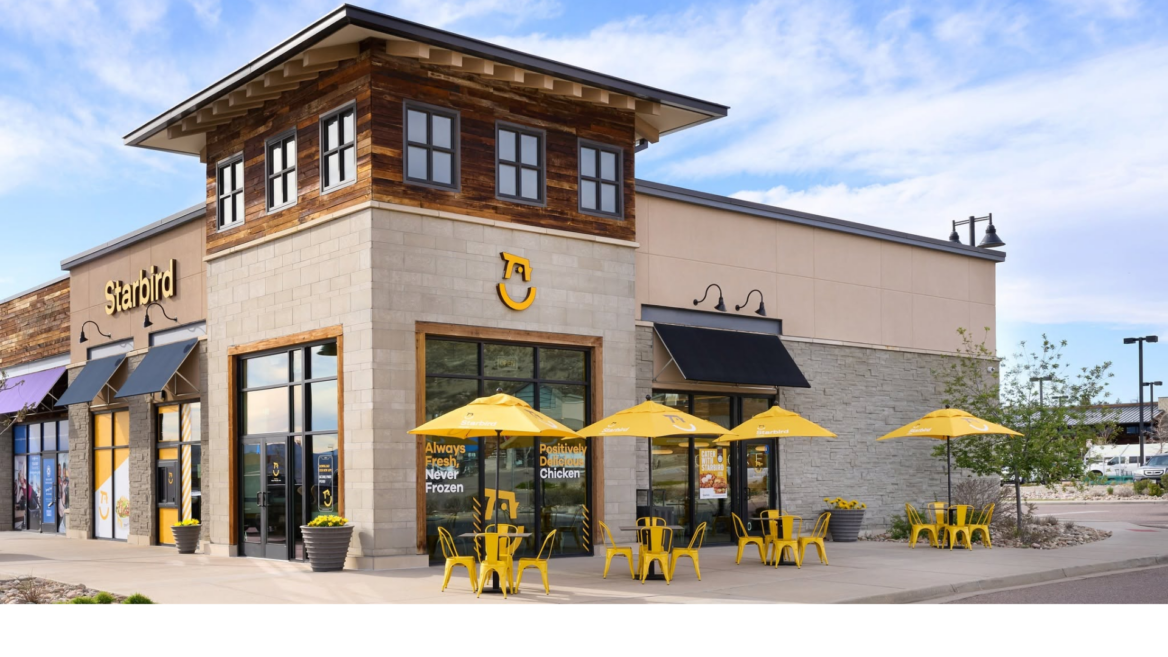

Starbird, the California-born premium chicken franchise brand, has signed a five-unit development agreement for the Chicago metropolitan area, marking the brand’s first expansion into the Midwest. The deal follows an earlier 36-unit franchise agreement for Texas and signals a deliberate push by the brand to build a national franchise footprint from a base of just 19 locations and an average unit volume approaching $3.2 million.
Starbird was founded in California in 2016 by Aaron Noveshen, the founder of culinary innovation consultancy The Culinary Edge. The brand centers its menu on fresh, never-frozen chicken with a focus on ingredient quality and customization. As of 2026, Starbird operates 19 locations, all in the United States, and entered the 2026 Franchise Times Top 400 at rank 413, reporting $60.8 million in systemwide sales and 26.7% unit growth over the prior year. Greg Levin joined as CEO in 2026 to lead the brand’s national franchise expansion.


Starbird Chicken
Feel Good Crispy Chicken
- Restaurant
- Liquid capital: $1000000
Chicago Becomes Starbird’s Third Major Franchise Market
The five-unit Chicago agreement marks the third major geographic market Starbird has entered through franchise development in 2026, after California (where corporate operations are based) and Texas. The Texas deal, signed earlier this year with Mac Haik Restaurant Group, covers 36 units and is among the largest single-operator franchise commitments in the brand’s history.
Mac Haik is primarily known as one of Texas’s largest automobile dealership groups, making the deal a marker of cross-sector operator interest in the brand’s financial model. The Chicago development group has not been publicly disclosed.
Starbird’s systemwide sales for 2026 across 19 U.S. locations, an average of approximately $3.2 million per unit. (Source: Franchise Times Top 400, 2026)

Unit Economics That Attract Multi-Sector Operators
With $60.8 million in systemwide sales distributed across 19 units, Starbird generates average unit volumes of approximately $3.2 million, a figure that compares favorably with the broader fast-casual chicken category. The brand’s franchise fee is set at $40,000, with a total initial investment estimated at $842,574 to $2,026,903 depending on location format.
This combination, elevated per-unit revenue relative to a defined investment range, is frequently cited in franchise investment analysis as a factor that draws operators with financial backgrounds and experience in high-volume concepts outside the restaurant sector.
Starbird by the numbers (2026)
19 locations in the U.S. $60.8 million in system sales. 26.7% unit growth. Rank 413 on the 2026 Franchise Times Top 400. Franchise fee: $40,000. Initial investment: $842,574 to $2,026,903.
Entering One of the Country’s Most Competitive Restaurant Markets
Chicago ranks consistently among the most contested restaurant markets in the United States, with a dense presence of both independent operators and established national chains across all categories. Starbird’s entry with five units positions the brand to test whether its premium California-origin franchise concept translates to Midwest consumer tastes and competitive conditions.
The brand’s sourcing and quality positioning place it alongside fast-casual operators competing on ingredient standards rather than price. A market like Chicago, with a large base of food-engaged consumers and established fast-casual habits, represents a meaningful proof of concept for national expansion ambitions.
From 19 Units to a National Network: The Road Ahead
Starbird remains predominantly a corporate-operated brand, with only two of its 19 locations currently franchised. The Texas and Chicago agreements represent the brand’s most significant franchise commitments to date.
The pattern of large-format deals, 36 units in Texas followed by five units in Chicago, suggests a strategy of establishing anchor operators in key regional markets rather than building franchise density incrementally. CEO Greg Levin joined in 2026 specifically to lead this expansion, and additional market announcements are possible as the brand continues to approach prospective franchisees with its unit economics profile.
This content is provided for informational purposes only and does not constitute legal, tax, financial, or professional advice. Laws and regulations vary by state and individual circumstances and may change over time. Readers should consult a qualified attorney, tax professional, or other licensed professional regarding their specific situation. Nothing herein creates an attorney-client relationship.