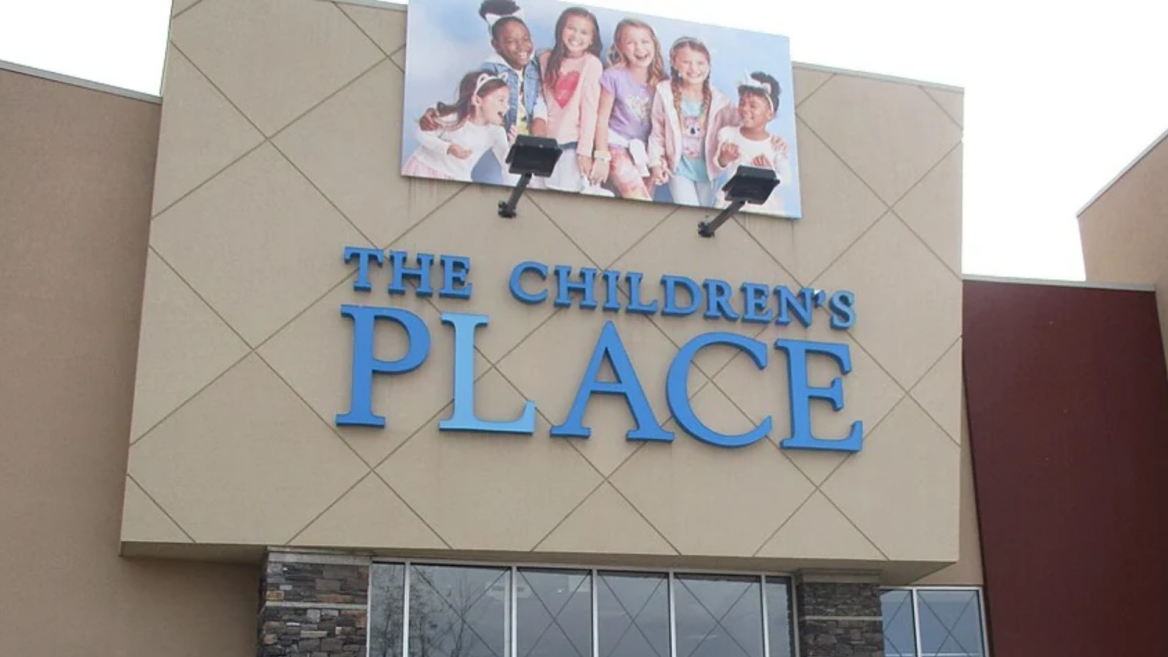

The Children’s Place, a specialty children’s apparel franchise chain founded in 1969 with roughly 500 stores across North America, filed for Chapter 11 bankruptcy on Sunday in the U.S. Bankruptcy Court of New Jersey. Store-closing sales are already underway, bids for the company are due December 9, and a sale is targeted to close by year-end.
The Children’s Place listed total debts of over $881 million and total assets of approximately $742 million in its court filings. The retailer’s brands include The Children’s Place and Gymboree. Its business spans two digital storefronts, its North American store network, wholesale marketplaces including Amazon, and 10 franchise agreements covering 13 international markets.
The company was still opening stores as recently as the second quarter of 2026, adding 19 locations in that period. A Saudi investment firm, Mithaq Capital, took a majority ownership stake two years ago, but that capital infusion was not sufficient to stabilize the company’s finances long-term.
A Sale Process Already in Motion
The company entered Chapter 11 with a sale process already structured. Bids are due December 9, and the target is to close a transaction by the end of the month. Nine proposals have been received prior to the filing, though court documents describe them as “not currently actionable.” Of those, six involved going-concern or intellectual property transactions, while three were equity liquidation proposals covering substantially all assets.
Three additional fee-based bids to liquidate inventory and certain assets were also received. A stalking-horse bid, which sets the minimum price future bids must beat, was due within days of the filing. The company has arranged debtor-in-possession financing through a new term loan with its existing secured lenders.
Potential Buyers and What They Are Bidding For
Among the names that have emerged in analyst reports is Catalyst Brands, the company that owns J.C. Penney. Catalyst is reportedly interested in The Children’s Place intellectual property and approximately 200 of its store locations. Catalyst’s portfolio already includes brands acquired through bankruptcy processes, among them Brooks Brothers, Aeropostale, and Lucky.
Analyst Neil Saunders of GlobalData noted that acquirers are most likely to be “big brand conglomerates who will want to integrate Children’s Place into their wider businesses.” Discussions are described as ongoing in court filings, and neither Catalyst nor The Children’s Place commented publicly on that specific report.
To know
The Children’s Place operates through 10 international franchise agreements across 13 markets. The outcome of the sale process will determine the future of those franchise relationships. No US outlet reporting on the bankruptcy addressed what happens to international partners if the brand is sold in pieces or its IP is acquired separately from its retail operations. That question remains open as the sale process advances.
How the Company Reached This Point
The Children’s Place was founded the same year as The Gap, in 1969, and long held a dominant position in children’s specialty apparel. Analyst Neil Saunders pointed to a misstep in the company’s strategic direction in the years before 2022 as a contributing factor to its decline: “That proved to be a huge mistake, especially as the fortunes of the company changed in 2022 and beyond,” he said.
The Mithaq Capital investment two years ago provided a temporary stabilization but, according to Saunders, the company ultimately needed “a complete financial restructuring and overhaul.” Executives who were described as major financial backers left the company in the period before the filing, a development the company disclosed to regulators.
What Comes Next for the Brand
The December 9 bid deadline makes this one of the faster-moving retail bankruptcy sale processes seen in recent years. Stores remain open through the process, and store-closing sales that began before the filing are continuing. Whether the final buyer acquires the brand as a going concern, with stores intact, or takes only the intellectual property and digital assets, carries direct consequences for thousands of retail workers and for the company’s franchise and wholesale relationships. The Children’s Place has not indicated which outcome it considers most likely, describing the process as one designed to “secure the best path forward.”
This content is provided for informational purposes only and does not constitute legal, tax, financial, or professional advice. Laws and regulations vary by state and individual circumstances and may change over time. Readers should consult a qualified attorney, tax professional, or other licensed professional regarding their specific situation. Nothing herein creates an attorney-client relationship.