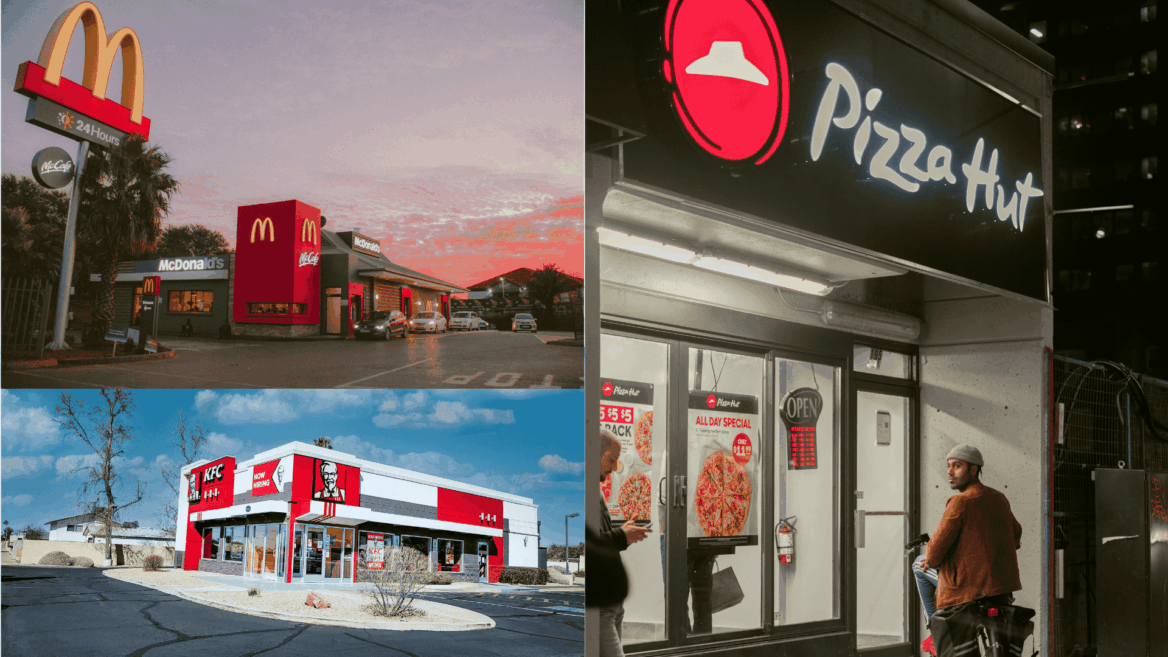

The entrepreneurial dream is alive and well in Canada, and franchise business models offer a proven path for aspiring entrepreneurs to recognize their dreams. Many Canadians look beyond the domestic market, investing in franchises with larger global footprints.
The world’s biggest franchise systems didn’t become global giants by accident. Franchisors built scalable models, invested in training programs, and created brands that work across borders. Understanding how these organizations grew helps prospective franchisees in Canada make smarter decisions about what to look for in any business opportunity, big or small.
What Makes a Franchise “Big”?
A firm answer to what are the biggest franchises in the world, in many ways, is an exercise conducted within the eyes of the beholder. However, aspiring entrepreneurs can make sound judgment calls using a series of pre-defined metrics to define franchises with scale, notably:
- Number of locations. The total count of outlets worldwide. This is the most straightforward measure of a big franchise’s physical reach.
- Systemwide sales: Total revenue generated across all franchised and company-owned locations. Complete franchise balance sheets reflect economic scale more accurately than unit count alone.
- Geographic reach: The number of countries where the brand operates. A true global footprint speaks to the adaptability of the model across different markets and cultures.
- Brand value: The estimated worth of the brand itself. The value of the franchise brand reflects consumer trust and long-term competitive strength.
The fact is that a franchise can be the biggest by one measure and not another. McDonald’s, for instance, leads in global brand recognition and systemwide sales. Meanwhile, 7-Eleven holds the record for sheer number of franchise locations. Both are legitimate measures of scale, but each metric reflects different dimensions of franchise success.
Top Biggest Franchises in the World: Key Examples
The brands below represent some of the largest franchise systems ever built. Each business model executed a distinct path to scale, but they all share a commitment to consistency, replicability, and strong franchisor-franchisee relationships.
7-Eleven: The World’s Largest Franchise Network
By raw location count, 7-Eleven is the largest franchise network on the planet. The convenience store chain operates over 83,000 locations across 17 different countries. The 7-Eleven Canada subsidiary began in 1969 with a single store in Calgary, but maintains over 550 locations today.
Founded in 1927 in Dallas, Texas, 7-Eleven grew through a combination of direct ownership, franchising, and international licensing agreements. The business went through several rebrands before settling on the iconic 7-Eleven, and the business began franchising in 1961 — giving regional operators the flexibility to adapt the model to local markets.
The franchise has been most successful in Japan, where it has grown into the largest convenience store franchise by sales and number of stores. It’s a testament to how a North American concept can be embedded into a wholly different cultural context and thrive. The result is a network so dense that, in many urban markets, a 7-Eleven is never more than a few minutes away.
McDonald’s: The Iconic Fast-Food Giant
McDonald’s is the world’s most recognized restaurant brand, operating over 44,000 restaurants across 100 different countries. Approximately 95% of all McDonald’s businesses are operated by independent franchisees, collectively serving roughly 70 million customers every day.
What made McDonald’s the defining fast-food franchise is its obsessive commitment to standardization. Ray Kroc was the infamous franchise advisor who purchased the original McDonald’s from its founding brothers. As the new chief executive, he spearheaded the growth of McDonald’s into the global franchise it is today, promoting a model based upon delivering a consistent customer experience.
McDonald’s invested heavily in training infrastructure, notably Hamburger University, its global training facility. They’ve developed operational manuals so precise that a franchisee in Toronto could run essentially the same business as one in Tokyo. That repeatability is the core of what made it one of the most lucrative franchises in Canada and in the world. For anyone wondering how to open a restaurant or start a franchise, McDonald’s model shows why strong processes, detailed manuals, and robust support are non-negotiable.
Pizza Hut: The Global Pizza Franchise Leader
Pizza Hut is the world’s largest pizza franchise by number of locations. Today, they operate over 19,000 restaurants in over 100 countries — over 600 of which are found within Canada.
Founded in 1958 in Wichita, Kansas, Pizza Hut began franchising just one year after opening its first location. The franchise rapidly expanded across the United States before going international. Today, approximately 99% of its locations are franchised which, together, generated $13 billion in revenue in 2023.
The brand operates across multiple formats, ranging from traditional dine-in restaurants to delivery-only kitchens. Franchisees are given flexibility to modify the model, depending on local market conditions. Pizza Hut is another strong example of how a food franchise can scale globally while adapting its format to different real estate and consumer contexts.
The UPS Store
The UPS Store is the franchised subsidiary of the corporate-owned UPS. The UPS Store has become the world’s largest franchisor of retail shipping, postal, printing, and business services.
Over 360 of The UPS Store franchises are located across Canada. The franchise is routinely ranked as one of the top ten leading franchise brands across Canada and the United States.
The UPS Store began as a different entity, originally founded in 1980 as Mail Boxes Etc. The brand was acquired by UPS in 2001, and the independently owned franchises continued under the new franchise brand. The success of The UPS Store franchise business model reflects strong and sustained demand from small businesses and remote workers for the reputation and convenience of the brand’s professional services.
Planet Fitness
Planet Fitness is one of the largest fitness franchises in North America by membership. The business maintains over 2,700 locations — 91 within Canada — and over 20 million members as of the end of 2025.
More than 90% of its clubs are franchisee-owned. Planet Fitness scaled rapidly by targeting a segment of the market that traditional gyms often neglected — casual, first-time, or budget-conscious members — with low monthly fees and a deliberately welcoming atmosphere. Over time, the business pivoted to attract more fitness enthusiasts, building more intense training programs to capture that audience.
This dual positioning created a durable, membership-based revenue model that has proven highly attractive to franchise investors. Planet Fitness continues to attract new franchise investors, and their franchising terms stipulate what’s required of new potential owners.
What Canadian Entrepreneurs Can Learn from These Franchise Giants
Each of these brands represent some of the biggest franchises in the world. Their paths to scale, while distinct to their respective niches, offer many overlapping comparisons that new entrepreneurs can learn. Many of those lessons apply just as much to a single-location franchise in Ontario as to a global network of thousands. A few key takeaways stand out:
- Repeatable systems win. Every brand on this list built operational manuals, training programs, and quality standards that allowed thousands of independent operators to deliver a consistent experience. The strength of a franchise system is, ultimately, the strength of its processes.
- Training and support are non-negotiable. Examples of franchisee training programs, such as McDonald’s Hamburger University or Planet Fitness’s onboarding programs, all reflect the same principle: a well-supported franchisee is a more profitable franchisee.
- Brand consistency drives trust. Customers return to franchises because they know what to expect. Maintaining brand standards — even when local adaptation is encouraged — is what makes a franchise more resilient than an independent business.
- Local adaptation matters. None of these brands expanded globally by ignoring local markets. 7-Eleven’s dominance in Japan, or McDonald’s regional menus, all demonstrate a deliberate balance between global standards and local relevance.
How You Can Find Your Own Franchise Success
You don’t need to build the next 7-Eleven to build a meaningful business. The same principles that drove global franchise giants apply at every scale. A proven model, strong brand support, consistent execution, and a clear understanding of local market demand will help guide the trajectory of your new franchise business — even if you’re starting with a cheap franchise.
Canadians who dream of becoming successful entrepreneurs can use the opportunity of a franchise system to help achieve their goals. Whether investing in a household global name or a growing domestic brand, it’s the business model, brand values, and support infrastructure that must align with your entrepreneurial skills and financial goals.
The world’s biggest franchises didn’t grow by luck. They grew because thousands of individual franchise owners made good decisions, worked the system, and built something lasting in their local communities. Canada is a bountiful land of opportunity, and the right franchise business can help you carve out a piece of the Canadian entrepreneurial dream.