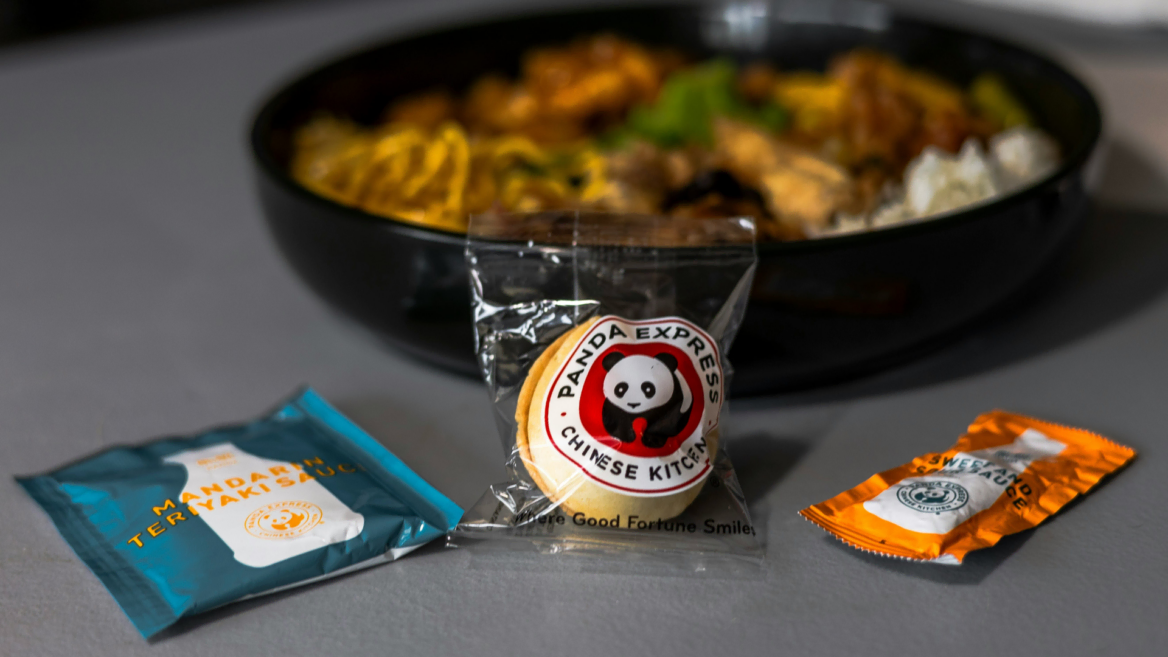

Most of us are familiar with America’s favorite place to grab buttery fried rice, sweet orange chicken, and crunchy egg rolls to go. Panda Express has all the hallmarks of a fast-casual American franchise: an instantly recognizable logo, bold brand colors, and locations scattered across the country. But entrepreneurs may be surprised that Panda Express isn’t a franchise. Discover the reasoning behind Panda Express’s ownership model, who can open a location, and which fast-casual restaurant chains are true franchises below.
Is Panda Express a franchise?
According to the International Franchise Association, a franchise is a business model in which an established company allows an individual or a group to legally operate one of its locations, use its trademarked materials, and sell its products or services in exchange for royalties.
“Panda Express franchise” is a misnomer.
The chain is not a franchise because its family-run parent company, Panda Restaurant Group, operates under a corporate ownership model. This means that the parent company owns and operates each of its 2,500+ U.S. locations, so individuals or groups cannot purchase a standard Panda Express location.
Who can open a Panda Express location?
While many of its locations are traditional, standalone drive-thrus, Panda Express operates locations in non-traditional areas through limited licensing agreements. These agreements allow Panda Express to open locations in areas owned by other companies, such as airports, university cafeterias, casinos, and international markets.
A limited licensing agreement allows a chain to open locations in lucrative, high-traffic areas without losing control of its ownership, corporate guidelines, or brand standards. This model differs from the franchise model because entrepreneurs can’t simply open their own location through the parent company. Instead, an institutional foodservice operator (like an airport concessionaire or university dining manager) grants the restaurant chain a license to use a portion of their space to conduct business.
This means that, if you want a stake in Panda Express’s success, you must operate a space like an airport or a cafeteria with independent vendor stalls and offer an untapped market that may interest Panda Restaurant Group.
More from L’Express Franchise
Panda Express franchise cost and financial expectations
If you meet the above guidelines, you may be able to secure a partnership with Panda Restaurant Group. If you are a foodservice operator who partners with other restaurant chains, you may already know that a limited licensing agreement:
- Does not feature a traditional franchise fee
- Generally involves a negotiated royalty structure tied to gross sales
- Allows the foodservice operator to control the real estate and facilities aspects of the location
While projected costs depend on several factors, you can generally expect to invest at least $515,000 in a licensed Panda Express location, according to franchising data source Franchise Payback. Since Panda Express franchise prices depend heavily on the operating location, volume expectations, and exact licensing agreement terms, you may need to invest more or less. Additionally, limited licensing agreements are often privately negotiated, making it difficult to estimate investment.
Alternatives for entrepreneurs seeking a Panda Express franchise
Since Panda Express does not follow a traditional franchise model, it may be difficult for entrepreneurs to benefit from its brand recognition and omnipresence. Instead, you may consider becoming a franchisee for:
- Pei Wei Asian Kitchen, a small fast-casual Asian food chain
- Teriyaki Madness, a small-to-medium fast-casual Asian bowl chain
- Benihana, a small-to-medium sit-down chain offering Japanese-inspired hibachi meals
- QDOBA Mexican Eats, a medium Tex-Mex chain with brand recognition and a line-service model