
For almost 100 years, 7-Eleven has been reimagining convenience. What began as a small stand on the dock of a Dallas icehouse is now a global brand with more stores than any other retailer worldwide — a testament to innovation and an entrepreneurial spirit.
Keep reading to discover the story of 7-Eleven.
The Early Days of 7-Eleven
Before there was 7-Eleven, there was the Southland Ice Company, an icehouse company that primarily sold large blocks of ice to families and individuals without refrigerators in Dallas, Texas. Nearly 100 years ago, in 1927, one of the store’s locations began selling food in addition to ice. It was just the basics — items like milk and bread — but customers loved the convenience it provided.
In 1928, a store manager named Jenna Lira brought a totem pole home from a trip to Alaska and decided to display it outside of her store. It attracted attention, and soon the store’s other locations began putting totem poles outside of their stores as well, and a new name caught on: Tote’m Stores.
The same year, the company dared to ask what it would look like to add filling stations to their stores. It was a decision that would define them for the next century.
The company struggled during the Great Depression and Prohibition, falling into bankruptcy, but came back with a new vigor following Prohibition’s repeal. They began focusing heavily on food and drink, including beer and liquor. Not long after, in 1946, the store began offering unprecedented hours: they were open from 7 a.m. to 11 p.m. It was at this time that their final major rebrand took place, and the store officially became 7-Eleven.
Expansion and Franchising: Stateside and Across the Globe
Though 7-Eleven’s hours were already unusually extensive, the company began experimenting with opening 24-hour locations in college towns. It wasn’t long before the chain began expanding rapidly beyond Texas, opening on the East Coast before launching all across the country.
In 1964, 7-Eleven began to franchise, and their growth truly became unstoppable. In addition to opening locations all over the United States, international franchise locations began to spread worldwide — first in Canada, then Asia, Mexico, and beyond. By 1974, there were over 5,000 7-Elevens across the globe. By 2003, that number had skyrocketed to 25,000.
Despite its growth, 7-Eleven’s expansion hasn’t been without hardship. The company went bankrupt in 1990 for the second time, re-emerging the following year with 70% of its stock in the ownership of a Japanese company by the name of Ito-Yokado Co. Today, the company is owned by Seven & I Holdings Co., a retailer formed by Ito-Yokado Co.
More from L’Express Franchise
Slurpees, Big Gulps, and More
7-Eleven knew that they needed to offer more than just convenience. They needed to create signature products and experiences that kept customers coming back. Enter the Slurpee: 7-Eleven’s most iconic staple, which remains a hallmark of American culture to this day.
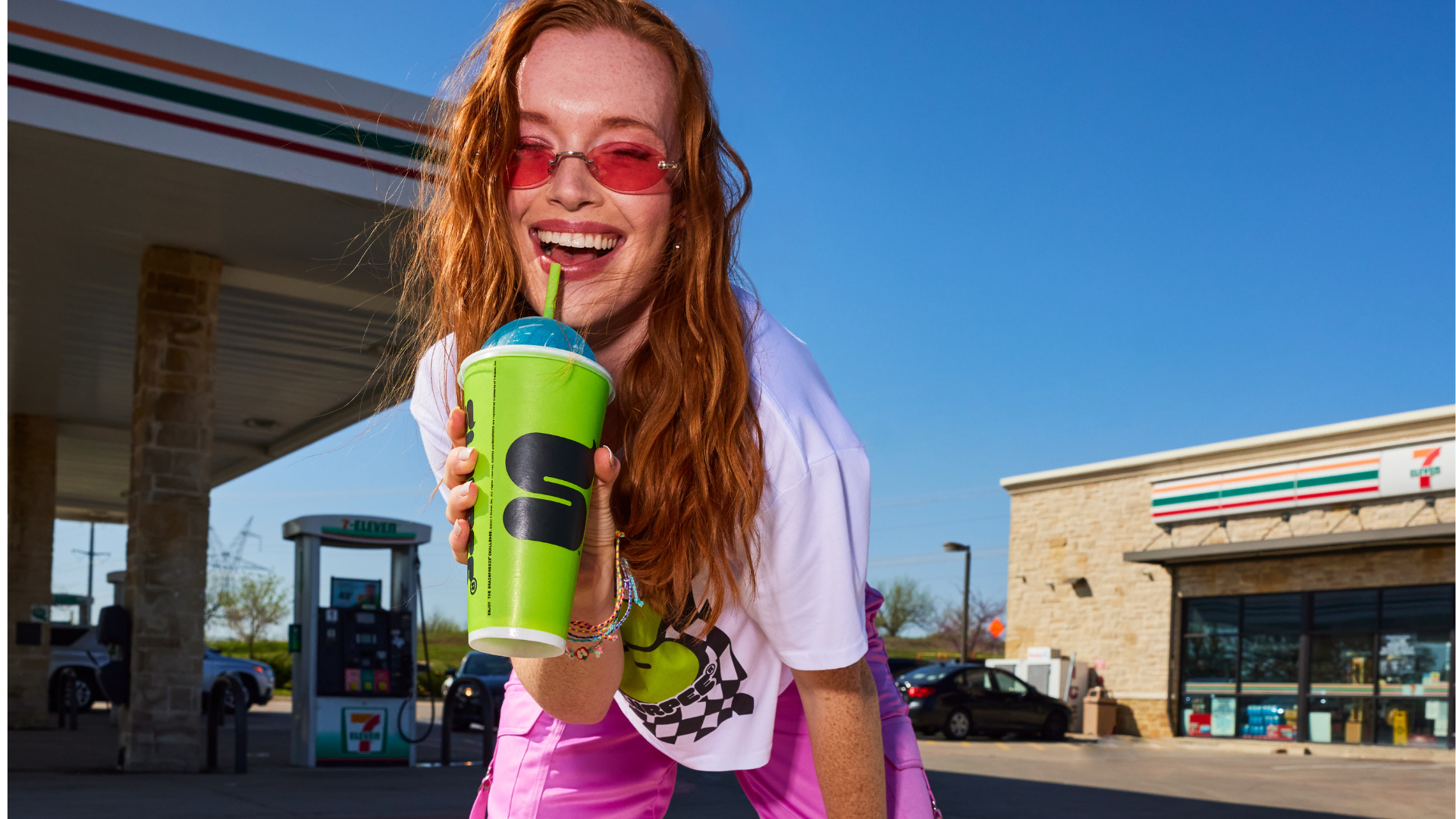
In the 1950’s, Omar Knedlik — the owner of a Dairy Queen franchise — had created a machine that made slushy sodas in what could only be described as a happy accident. In 1965, 7-Eleven licensed the machines and started calling the frozen beverages Slurpees. They were an instant hit and quickly became synonymous with the convenience store itself. To this day, July 11th (7/11) is known as 7-Eleven Day, and is celebrated with free Slurpees for all.
Another 7-Eleven fan favorite? The Big Gulp, first introduced in 1976 as a 32-ounce cup for fountain drinks. Over the years, 7-Eleven has added options like the Super Big Gulp and the Team Gulp, with sizes spanning up to 128 ounces. The brand continues to add new, custom drinks to the Big Gulp bar, keeping customers coming back to try the latest and greatest.
The Modern Era of 7-Eleven
Today, 7-Eleven hosts a wide number of brands under their umbrella, including Speedway, Stripes, Laredo Taco Company, and Raise the Roost Chicken & Biscuits. They also have more stores than any other retailer globally, with 86,000 locations across 19 countries. They hope to reach 100,000 stores by 2030, opening franchise locations in the States as well as in Africa, Latin America, Europe, and the Middle East.
The company consistently ranks as a top-10 franchisor, and they plan to continue creating and innovating for customers and franchise owners alike for years to come.